By Brad Parker, General Manager
Anchored Walls
You have moisture in your crawl space, so you lay down a sheet of plastic. Easy, right? For some homes, it really is. But if that familiar musty smell returns or condensation reappears, moisture may be coming in from other places.
After decades of helping Iowa homeowners tackle crawl space and foundation moisture, Anchored Walls understands why the crawl space encapsulation vs vapor barrier decision varies from home to home. So, which option makes sense for yours? Let’s explore the differences between crawl space encapsulation and vapor barriers and figure it out together.
A vapor barrier is polyethylene sheeting, typically 6 mil thick or more, laid across the dirt to slow moisture from working its way up into your crawl space.
What does that mean once it’s under your house?
Ground Moisture: Covers exposed soil and reduces the amount of ground moisture entering the crawl space.
Walls and Openings: A basic floor barrier leaves other moisture entry points unaddressed, including foundation walls and open vents.
Air Control: Putting plastic on the ground doesn’t suddenly make the crawl space a controlled environment. Outside air can still move through a vented space.
If ground moisture is the key problem and your crawl space doesn't have a history of condensation or moisture damage, a durable vapor barrier may be enough. Your home’s drainage is doing its job.
Crawl space gaps, unsealed seams, exposed foundation walls, and open vents let moisture sneak in, especially during Iowa’s humid summer weather. When that warm, humid air reaches cooler pipes or ductwork, condensation can follow. If moisture is coming from beyond the ground, a vapor barrier may only solve part of the problem. That’s when crawl space encapsulation starts to make more sense.
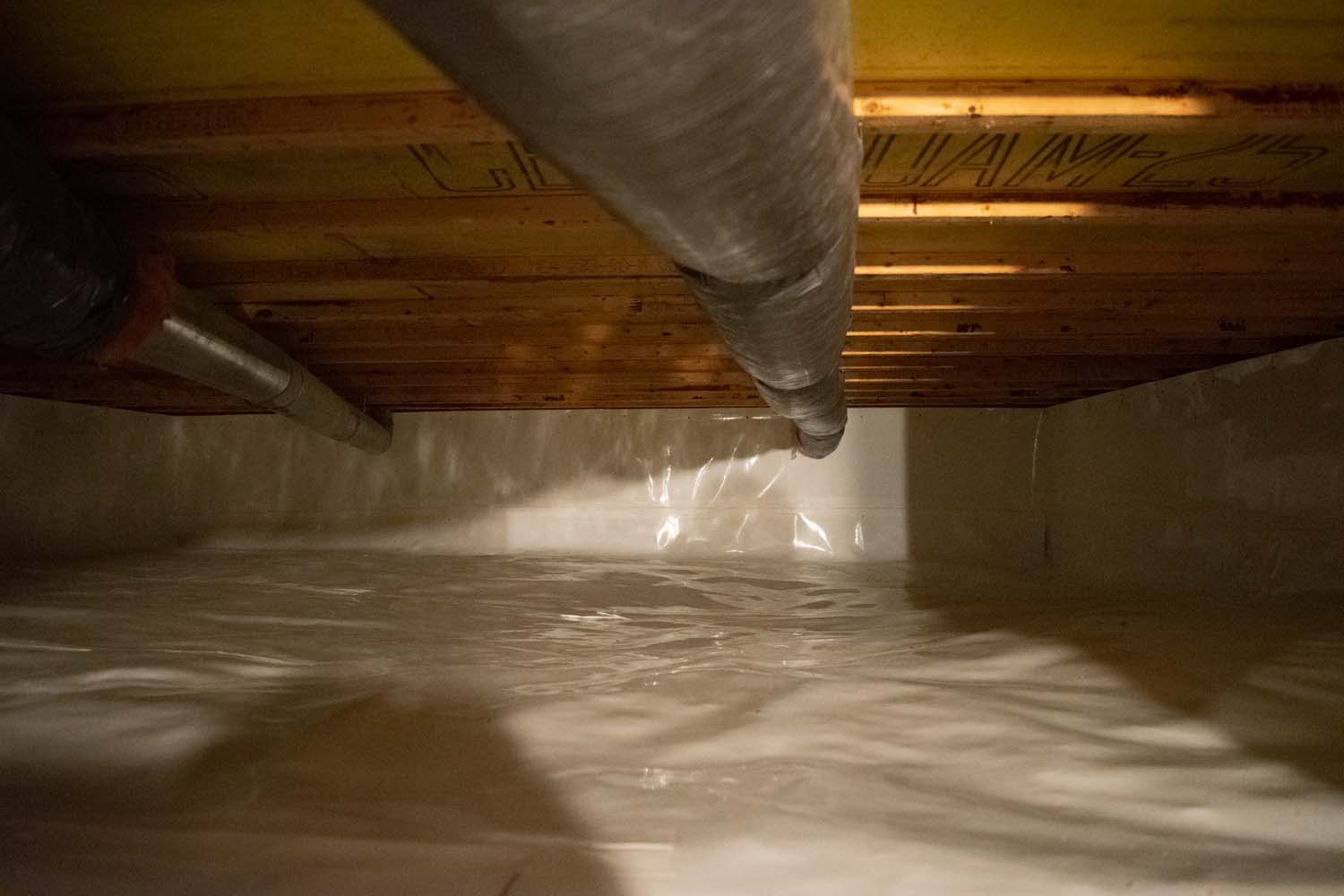
Crawl space encapsulation covers more than just the dirt. It features a liner that runs across the floor and up the foundation walls, sealing off seams and openings from moisture and humid air. Depending on the crawl space, the system may also include drainage, a sump pump, or humidity control.
A typical crawl space encapsulation system includes:
Basic polyethylene works well as a ground vapor barrier, but an encapsulation liner has to handle a tougher environment. It covers more of the crawl space and must withstand regular access without tearing easily.
That’s where reinforced liners come in. Added strength resists punctures and damage, giving the sealed system a more durable surface over time.
Crawl space encapsulation is especially beneficial during Iowa summers, when humid air entering a cooler crawl space creates condensation. Closing seams, vents, gaps, and other openings minimizes the humid outdoor air entering the crawl space, while a dehumidifier or other conditioning approach may be needed to manage lingering moisture.
General market estimates put vapor barrier replacement around $1,000 to $3,000, while professional encapsulation can run roughly $5,000 to $15,000. The difference in ranges reflects the extra material and labor involved in sealing the space, along with drainage, a sump pump, or humidity control when needed.
If you’re trying to get to the bottom of how much crawl space repair costs in Iowa, schedule a professional inspection to look beyond national averages.
| Vapor Barrier | Crawl Space Encapsulation | |
|---|---|---|
| What It Is | Polyethylene sheeting that limits ground moisture | A broader moisture-control system that includes a liner and sealing |
| What It Covers | Primarily exposed soil | Floor, foundation walls, seams, and other openings |
| Moisture Control | Focused on moisture rising from the ground | Addresses ground moisture and helps limit humid air entering the space |
| Indoor Air Quality | May help by reducing ground moisture | Can help create a drier, more controlled space beneath the home |
| Energy Impact | Limited | May help reduce the effects of humid crawl space air on the home |
| Durability | Depends on material thickness and installation | Reinforced liners are designed for greater durability |
| Best For | Crawl spaces where exposed soil is the main moisture source | Crawl spaces dealing with moisture from multiple sources |
| General Cost Range | Around $1,000–$3,000 for replacement | Often around $5,000–$15,000 for professional encapsulation |
For Iowa homes, the best choice depends on the moisture source. If exposed soil is the main source and the crawl space otherwise stays dry, a vapor barrier alone may do the job. If humidity, condensation, or moisture around the foundation keeps causing problems, encapsulation may be the better fit.
Choosing between crawl space encapsulation vs. a vapor barrier comes down to the source of the moisture. A vapor barrier may be enough for ground moisture, while encapsulation offers broader protection when moisture is coming from multiple areas.
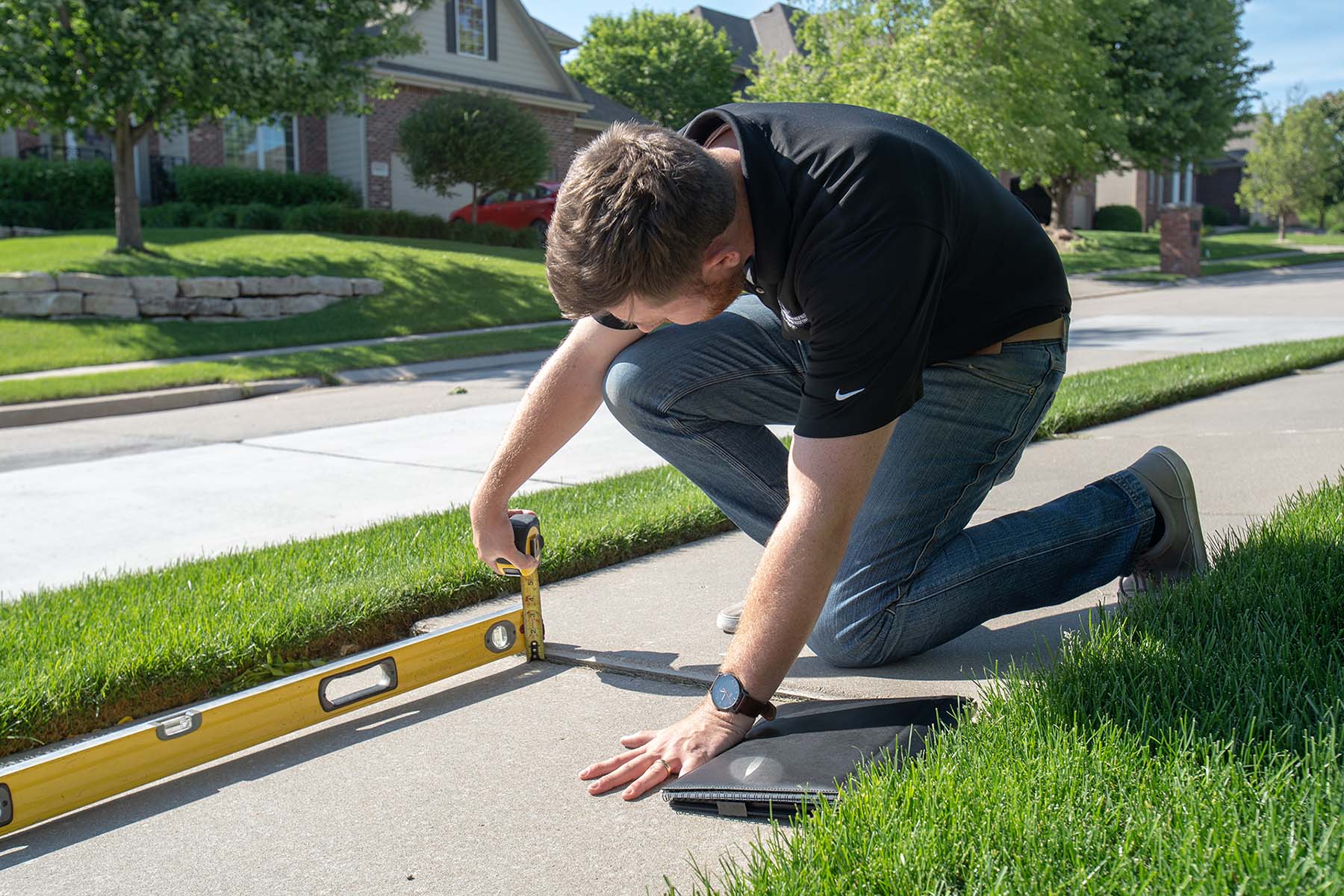
Have a professional check your crawl space before you spend money on either option. At Anchored Walls, our crawl space repair services identify what needs attention and what doesn’t, so you can prioritize the right fix and protect your investment.
Contact us today to schedule a crawl space inspection.


By submitting this form and signing up for texts, you consent to receive text messages from Anchored Walls at the number provided, including messages sent by auto dialer. These may include messages related to estimates, project updates, appointment scheduling, and promotional offers. Consent is not a condition of purchase. Msg & data rates may apply. Msg frequency varies. Unsubscribe at any time by replying STOP or clicking the unsubscribe link (where available) and no further messages will be sent. Reply HELP for help. Information will not be shared with third parties for marketing or promotional purposes. Privacy Policy

