Homes in Ames deal with foundation cracks, basement water, crawl space moisture, settled concrete, and older lower levels that need code-compliant egress. Anchored Walls provides foundation repair, basement waterproofing, crawl space encapsulation, concrete leveling, and egress window installation for homeowners in Ames.



In Ames, foundation and basement problems usually come down to water and soil movement. After a wet stretch, the ground around the house can stay heavy and saturated. In a dry spell, it pulls back. Over time, that cycle puts stress on basement walls, footings, and the concrete around the home. You might see a crack spread across a block wall, water showing up where the floor meets the wall, or a section of sidewalk starting to sink toward the house.
Ames homeowners also deal with long freeze and thaw stretches that keep that movement going. Water works into small gaps, the ground shifts, and the pressure around the foundation changes from season to season. Anchored Walls has been repairing those problems in Iowa since 1978. Their crews handle foundation repair, basement waterproofing, crawl space work, concrete leveling, and egress window installation for homeowners in and around Ames, with repairs backed by a life-of-the-structure warranty and money-back guarantee.
Ames sits on ground shaped by a glacier that covered this part of Iowa until about 12,000 years ago. When the ice melted, it left flat, young soil that never had time to develop natural drainage the way older, hillier land does elsewhere in the state. Soil scientists classify most of the ground under Ames yards as Nicollet and Webster types, both known for holding water close to the surface instead of letting it drain away quickly. After a hard rain, that water sits against a foundation wall for days instead of hours, and it's that steady pressure, not just the water itself, that pushes into cracks and works its way through basement walls.
This history shows up hardest in the city's oldest neighborhoods. Homes in Historic Old Town, most built between the 1880s and the 1930s, have sat on this same slow-draining ground for over a century, giving decades of freeze, thaw, and standing water time to work against their foundations. Newer neighborhoods built on the same soil face the same pressure, just with less time behind it.
A few changes come up again and again in Ames homes. A crack keeps growing along a basement wall. The floor stays damp for days after a hard rain. A slab outside starts tilting toward the house instead of away from it. Some homeowners notice one of these changes. Others notice several at once, spread across different parts of the house.
Cracks are one of the most common things homeowners notice. In a basement wall, they may run straight across a block or climb in a stair-step pattern along the mortar joints. On a concrete floor, a thin line can widen slowly over months as the ground beneath it keeps shifting through wet and dry stretches.
Some walls do more than crack. A block wall may bow inward through the middle, or one side of the basement may no longer look straight when you stand back and sight along it. That kind of movement means the soil outside the wall is pushing harder than the wall was built to resist.
Water tends to show up after heavy rain, snowmelt, or a stretch of wet weather. It can collect along the base of a wall, pool in a low spot on the floor, or reappear in the same corner every time it rains. In older basements especially, that repeating pattern usually points to a gap in the drainage or waterproofing.
Not every moisture problem shows up as water on the floor. A musty smell that gets stronger after rain, or air that never quite feels dry, both mean moisture is sitting in the space long enough to reach the walls, the framing, and anything stored down there.
Foundation movement often shows up in parts of the house used every day. A door that used to close easily starts catching at the top corner. A window that once slid open smoothly now sticks in its frame. Both can mean the structure has shifted slightly out of square.
Changes outside the house are just as telling. A front step pulls away from the porch. A sidewalk panel drops at one end. A patio slopes back toward the foundation instead of away from it. These are signs the ground below the slab has moved, and often the same movement is affecting the house itself.
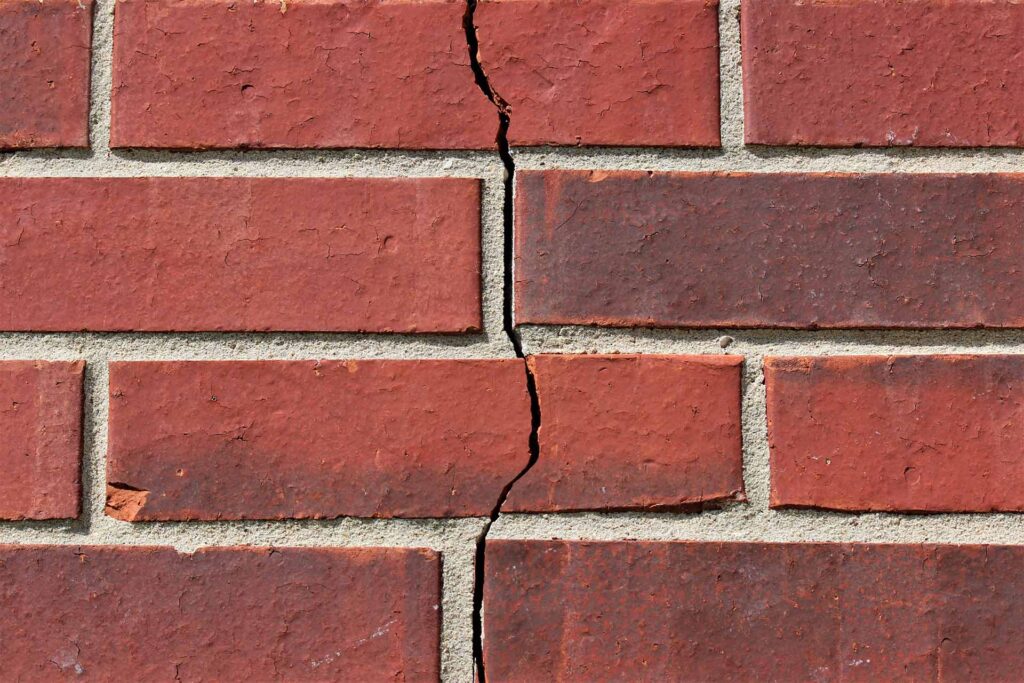
In Ames, foundation damage can show up in a few different ways. Basement walls can crack and start to bow inward under soil pressure. In other homes, the foundation starts to settle, and the changes show up through widening cracks, uneven floors, or doors and windows that no longer line up the way they should.
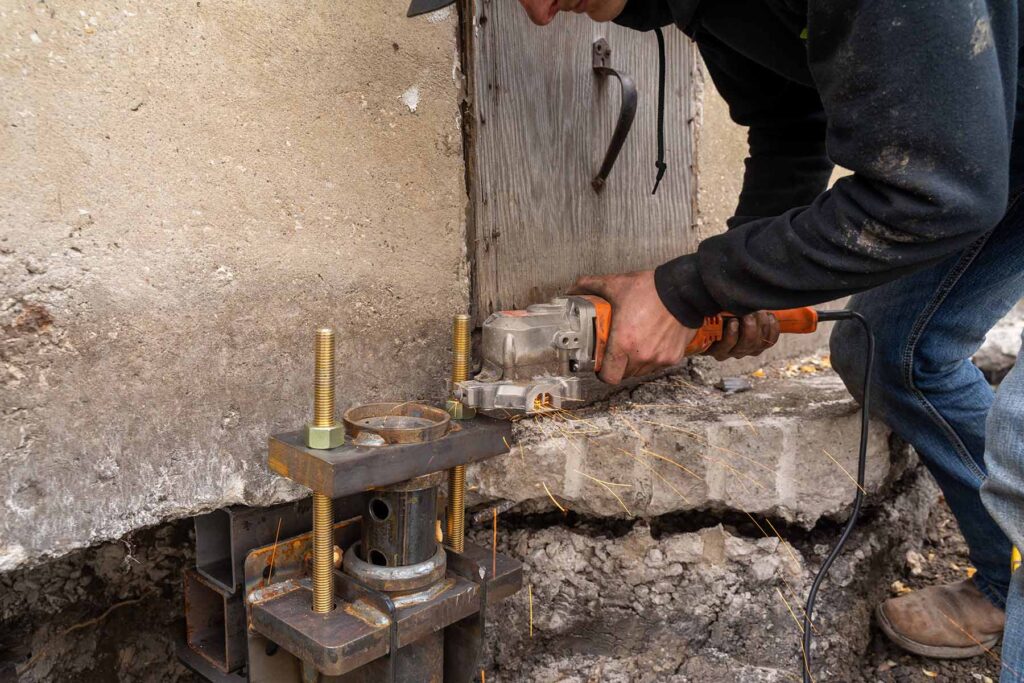
Anchored Walls handles both kinds of foundation repair. For walls that are cracking, leaning, or pushing inward, they use several reinforcement methods depending on how the wall is built and how far it has moved. Their repair options include wall anchors, helical tie-backs, waler steel beam systems, and carbon fiber straps. Each one is meant to stabilize the wall and keep the movement from getting worse.
When the issue is foundation settlement, Anchored Walls installs helical piers or push piers to support and stabilize the structure from below. Those systems are used when part of the home has dropped or shifted and the load needs to be transferred to more stable ground.
That range matters in Ames because not every crack points to the same kind of repair. Some homes need lateral support for a basement wall. Others need deep support for a settling foundation. The point of the inspection is to figure out which kind of movement is happening and match the repair to the house.
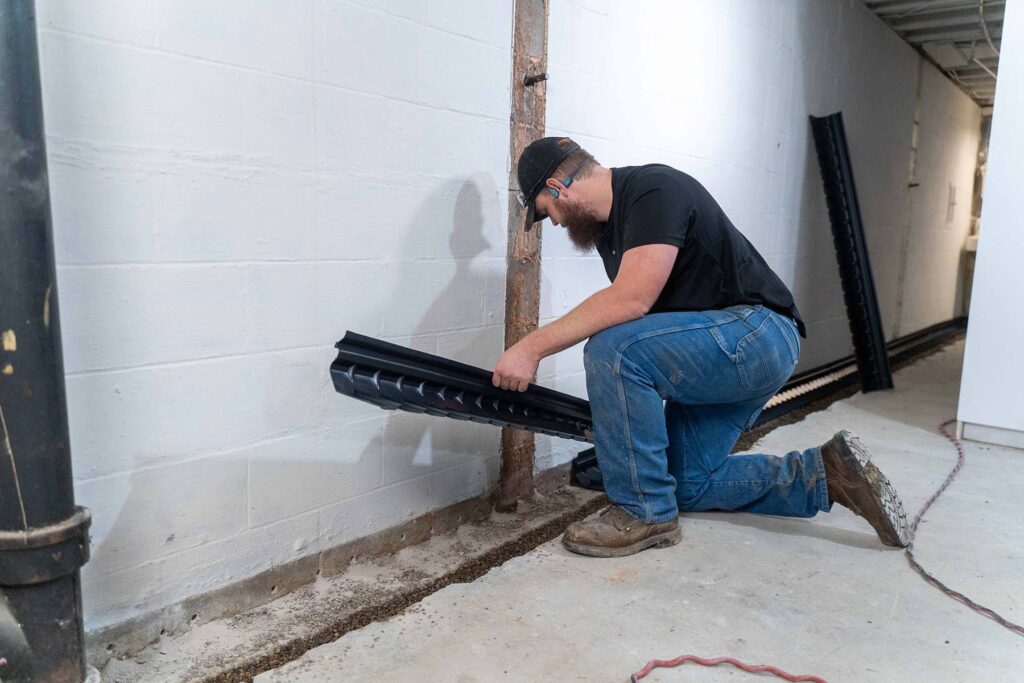
Water in a basement can damage more than the floor. It stains walls, ruins storage, leaves the air feeling damp, and makes the space harder to use after every storm. In some homes, the water comes in where the wall meets the floor. In others, it pushes through a crack or works up through the slab when the soil around the foundation stays wet.
Anchored Walls waterproofs basements with interior drain tile, sump pump systems, and crack repair. These systems catch water as it enters and move it into a controlled drainage path before it spreads across the basement, so water stops resurfacing in the same spots year after year.
A dry, working drainage system opens up what that lower level can actually be used for. Storage, a workshop, a finished room, all become realistic once the water problem is solved.
Crawl space problems in Ames often show up through the floors above them. Floors can start to feel soft, uneven, or bouncy in certain rooms. The house may pick up a musty smell that gets worse in humid weather. When moisture builds up in the crawl space, insulation can sag, wood framing can stay damp, and supports under the floor can start to weaken.
Anchored Walls repairs crawl spaces by controlling water, ground moisture, and humidity under the home. Our crawl space services can include crawl space encapsulation, vapor barriers, drainage systems, sump pumps, dehumidifiers, and added support where the floor system has started to sag. Crawl space encapsulation helps seal the area off from ground moisture and outside air, keeping the space drier and easier to control.
The floor above the crawl space is usually the first place these repairs show results. Rooms that felt soft or uneven start to feel solid again once the moisture problem underneath is under control.

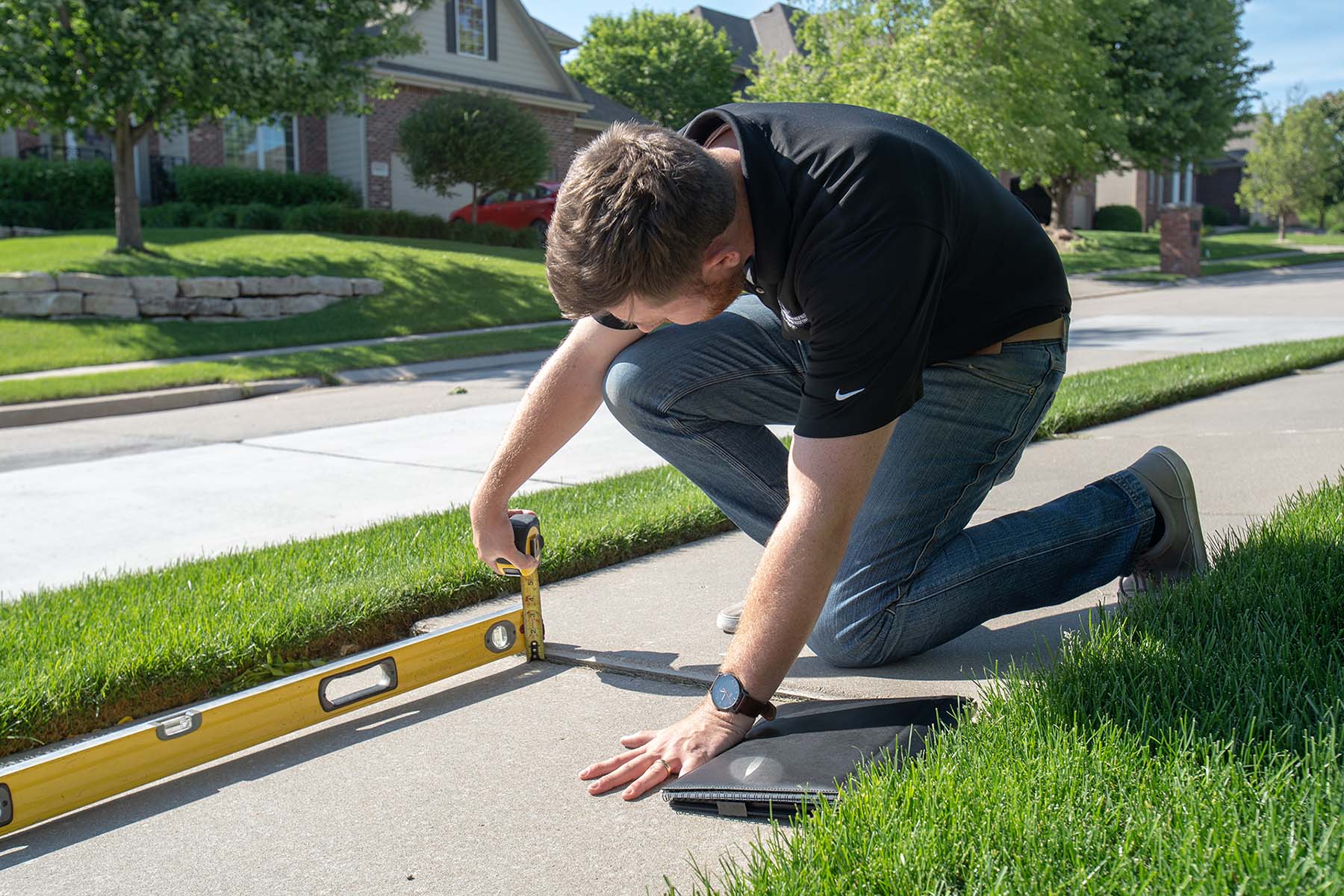
Uneven concrete around the house can create problems fast. A sidewalk panel lifts or drops enough to catch your foot. Front steps no longer sit level. A driveway starts pulling away at the garage or settles into a low spot that holds water. In Ames, those changes usually point back to shifting soil under the slab.
Our concrete leveling service is designed to lift and support settled slabs without tearing them out and replacing them. Anchored Walls uses polyfoam to fill the empty space under the concrete and raise it back toward its original position. That can help level sidewalks, porches, patios, driveways, and steps while improving the way water drains around the house.
A lifted slab does more than look better. It removes a trip hazard, stops water from pooling against the house, and keeps the settlement from getting worse before it spreads to the next section of concrete.

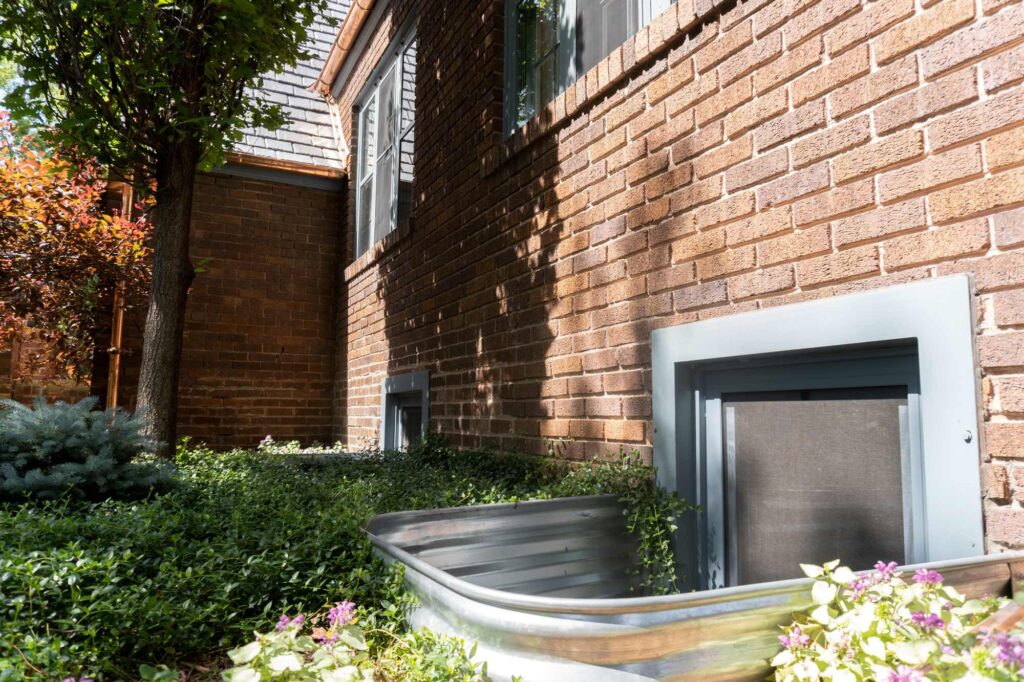
If you are adding a bedroom to a basement in Ames, an egress window is part of making the space code-compliant. Iowa code requires basements and sleeping rooms to have an operable emergency escape and rescue opening that opens directly to the outside. The City of Ames also spells out key size requirements for egress windows, including a minimum net clear opening of 5.7 square feet, a minimum opening width of 20 inches, a minimum opening height of 24 inches, and a sill height no more than 44 inches above the floor.
Anchored Walls installs egress windows for homeowners in Ames who want to finish a basement the right way. Our crews handle the excavation, cut the opening in the foundation wall, install the window and well, and make sure drainage is in place so water does not collect against the house. That gives the basement more natural light, a safer way out in an emergency, and a better path toward code compliance for a finished lower level.
Anchored Walls has been working on foundations, basements, and crawl spaces in Iowa since 1978. Our crews handle the repairs themselves, from straightening a basement wall to installing an interior drain system, lifting settled concrete, or cutting an opening for an egress window. That means the people inspecting the problem are the same people doing the work from start to finish.
Qualifying repairs come with a life-of-the-structure warranty and a money-back guarantee, both of which transfer with the house if it's sold. A repair that holds up for decades is only as good as the backing behind it, and a warranty that follows the property gives homeowners something concrete if an issue shows up years down the road.
If something around your Ames home does not look right, it is worth getting it checked before the damage spreads. Cracks in the basement, water after rain, sagging floors, or settled concrete usually point to a larger issue with moisture, soil movement, or support below the house.
Anchored Walls inspects foundations, basements, crawl spaces, concrete, and egress window needs in Ames and the surrounding area. We will look at what the house is doing, explain what we see, and recommend repairs that fit the problem. If work is needed, you will know what is involved, what it is meant to fix, and what kind of long-term protection comes with it.
By submitting this form and signing up for texts, you consent to receive text messages from Anchored Walls at the number provided, including messages sent by auto dialer. These may include messages related to estimates, project updates, appointment scheduling, and promotional offers. Consent is not a condition of purchase. Msg & data rates may apply. Msg frequency varies. Unsubscribe at any time by replying STOP or clicking the unsubscribe link (where available) and no further messages will be sent. Reply HELP for help. Information will not be shared with third parties for marketing or promotional purposes. Privacy Policy

