It usually starts with a smell.
A musty odor is creeping up from the basement. Maybe some discolored spots on the wall, or a fuzzy patch near the floor. At first, it’s easy to brush off, just an old house smell, a bit of dust, maybe something you’ll get around to cleaning.
But mold and mildew in the basement are rarely just surface-level. They’re signs of a deeper water problem beneath your home. And the longer you ignore them, the more damage they can do to your walls, your air quality, and your peace of mind.
Whether you’ve spotted growth or simply noticed that stale, damp feeling in the air, Anchored Walls is here to help you stop the moisture at its source.
Mold and mildew need just two things to grow: moisture and poor airflow. Unfortunately, basements provide both.
Water enters through cracks in the foundation, collects near footings, or seeps in through porous concrete walls. Even if there’s no visible flooding, the constant pressure of groundwater around your foundation can force moisture through the walls, a process known as hydrostatic pressure. That moisture lingers in the air, creating a damp environment where mold spores thrive.
Cool, still air and limited ventilation make basements the perfect place for those spores to settle and spread. Over time, what starts as an invisible problem becomes visible on walls, floors, and anything stored nearby.
If you’re seeing mold, you’re already dealing with a basement that’s too wet.
Mold doesn’t always announce itself with a bold patch on the wall. In many homes, the symptoms start small, easy to miss, but impossible to ignore once you know what to look for.
Musty smell that never goes away
Even if you can’t see it, that damp, stale odor rising from the basement is often the first sign that mold is spreading behind walls or under floors.
Dark streaks or patches on walls
Black, green, or brown spots, especially near the base of foundation walls, may point to mold growth caused by hidden moisture intrusion.
White fuzz or discolored spots near floor joints
Efflorescence or surface mold often appears on joists, insulation, or stored items where humidity builds up over time.
Peeling paint or chalky residue
Paint that bubbles, flakes, or shows a dusty film could be reacting to constant moisture behind the wall, making it a perfect host for mold.
Coughing or allergies that worsen in the basement
Mold spores can trigger breathing issues, especially in damp, closed environments. If symptoms improve upstairs, your basement air may be to blame.
Basement mold isn’t just a stain; it’s a symptom. And covering it up won’t stop what’s causing it.
Many homeowners try to paint over moldy patches or seal their walls with waterproof coatings. But if the foundation is still allowing moisture in, the mold will come back, sometimes hidden, sometimes worse. Mold doesn’t need standing water to grow. It only needs a damp surface and a little time.
Store-bought cleaners might remove what’s visible, but they don’t fix the cracks, the water pressure, or the vapor coming through the walls.
That’s why true mold control starts with stopping the moisture. Until you fix what’s happening behind the surface, you’re only treating the symptoms, not the source.
At Anchored Walls, we understand that mold is never just a surface issue; it’s a sign that your basement is holding more moisture than it should.
With over 40 years of experience serving Iowa and Missouri homeowners, our team specializes in solving the cause of basement mold. Whether it’s a foundation crack letting water seep in, poor drainage around the home, or water vapor pushing through the walls, we design a solution that stops the moisture at its source.
Our services may include:
Every fix is built for long-term performance, no shortcuts, no surface-only treatments. We don’t just want your basement to look better. We want it to stay dry, clean, and safe for years to come.
Mold and mildew are signs that your basement is holding too much moisture, and that the problem may be growing behind the walls. Anchored Walls can help you find out why it’s happening and fix it for good.
Schedule a free evaluation today. Our team will inspect your basement, explain what’s causing the issue, and recommend a long-term solution you can trust.
If your basement feels damp, smells musty, or shows signs of moisture, a vapor barrier might be part of the solution. At Anchored Walls, we’ve helped homeowners across the region protect their homes from the long-term damage moisture can cause. Here's what a vapor barrier does, how it works, and why it might be worth considering for your home.
Simply put, a vapor barrier is a material that helps block moisture in the form of water vapor from passing through your basement walls. It doesn’t stop liquid water like a sump pump or drainage system would—but it does help prevent that humid, sticky feel that basements can develop over time.
You might also hear the term vapor retarder. While these are similar, they’re not the same:
Some materials can do both. Anchored Walls’ proprietary Interior Encapsulation system acts as both a vapor and moisture barrier, offering more complete protection for your basement walls. This dual-layer defense helps ensure a dry, healthy basement environment no matter the conditions outside.
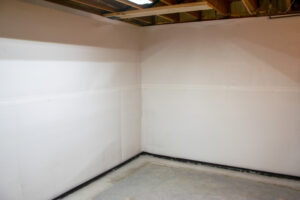
Vapor barriers come in a variety of materials—plastic sheeting, foil, and spray foam are some of the most common. Their main job is to slow or stop vapor transmission through the walls. When installed correctly, they help keep your basement dry, healthier, and more energy-efficient.
Vapor barriers are rated by permeability, measured in “perms.” The lower the perm rating, the more effective the material is at blocking vapor.
Here’s a quick breakdown:
Even if your basement doesn’t have visible water issues, it’s still prone to moisture problems. Here’s why:
Left unchecked, that excess moisture can lead to:
High humidity and organic materials (like wood or drywall) are a mold’s favorite combination. By lowering moisture levels, a vapor barrier helps prevent mold growth—protecting your health and your home’s value
Moisture may not seem urgent, but over time it can lead to deterioration of concrete walls, insulation, and wooden framing. A vapor barrier is one line of defense against this kind of hidden damage.
Did you know damp air takes more energy to heat? If your basement is humid, your HVAC system has to work harder to keep your whole home comfortable. Reducing vapor can help cut energy costs.
Even if you’re just using your basement for storage, a dry, odor-free environment makes a big difference. If you're finishing your basement, a vapor barrier is an essential first step.
Damp, dark basements are naturally attractive to pests like spiders, centipedes, silverfish, and even small critters like mice. While a vapor barrier isn’t a full pest control solution, it plays an important role in making the space less welcoming. By reducing moisture and sealing off access points along the wall, it helps discourage pests from settling in.
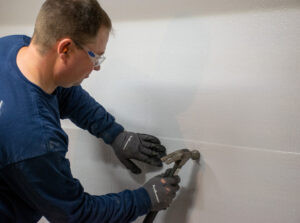
If you're handy, you might be able to install a wall vapor barrier yourself. Here's a general overview:
For floor vapor barriers, it’s best to call the pros—it’s a much more complex process.
While it’s possible to install a vapor barrier yourself, here’s why many homeowners trust a professional team like Anchored Walls:
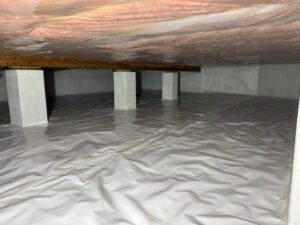
Vapor barriers aren’t just for basements—they’re just as important in crawl spaces. In fact, crawl spaces are often more vulnerable to ground moisture due to their open soil floors and limited ventilation.
At Anchored Walls, we install high-performance wall and floor vapor barriers in crawl spaces to help:
If your crawl space is damp or musty, or if you're noticing uneven floors or moldy smells upstairs, it might be time to seal and protect it. Our team will fully encapsulate the area, integrating a vapor barrier with drainage and dehumidification as needed.
A clean, sealed crawl space means a healthier home from the ground up.
A vapor barrier alone won’t solve all basement water problems—but it’s a key component of a healthy, dry basement. When paired with an interior drain tile system or sump pump, it helps protect your home from moisture, mold, and long-term damage.
If you’re noticing signs of basement or crawl space humidity, Anchored Walls is here to help.
Our experienced team can assess your home and recommend the right solution—whether that’s a vapor barrier, drainage system, or full waterproofing plan. Schedule your free estimate today.
If you're finding water coming through the basement floor, you’re not alone—and you’re right to be concerned. Water seepage in your basement can lead to mold growth, property damage, and even foundation issues if not addressed quickly.
This guide will walk you through why water might be coming up through your floor, what steps to take right away, and which long-term waterproofing solutions will keep your basement dry for good.
Seeing water seeping through your basement floor is more than just a nuisance—it’s a warning sign. The most common cause? Hydrostatic pressure.

The soil surrounding your home naturally contains moisture. After heavy rain or snowmelt, this water builds up in the ground, increasing pressure against your basement floor and walls. Over time, the force can push water through cracks in the concrete—or even through the pores of the concrete itself.
When the water table rises after storms or seasonal changes, excess groundwater presses against your foundation from below. If your basement floor wasn’t built to handle this pressure, water will find its way in.
Improper grading, clogged gutters, or downspouts that discharge too close to the house can allow water to pool around your foundation—eventually seeping into your basement.
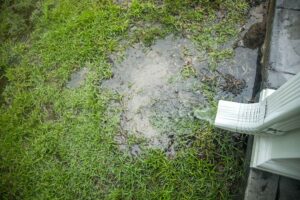
In some cases, water on the floor may not be coming from outside at all. Leaky pipes embedded in your basement floor can go unnoticed until puddles start appearing.
Start by cleaning up the water so you can identify where it’s coming from. Towels, mops, and even a wet/dry vacuum can help with initial cleanup.
If you suspect the water is from a plumbing issue, shut off your home’s main water supply. If you’re unsure where the valve is or how to use it, call a licensed plumber.
Moisture that lingers in a basement can quickly lead to mold and musty odors. Open windows and use fans or a dehumidifier to improve airflow and speed up drying.
If you’ve had water come through the floor once, it’s likely to happen again. Here are proven solutions to keep your basement dry for the long haul:
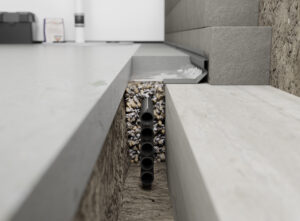
Interior drain tile systems are installed along the inside perimeter of the basement to collect and redirect groundwater before it reaches the floor. They’re a reliable, long-term solution for relieving hydrostatic pressure and keeping your basement dry.
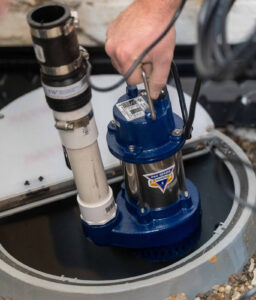
A sump pump is one of the most effective ways to manage rising groundwater. Installed in a pit below your basement floor, it activates when water levels get too high—pumping it safely away from your home.
Water often finds its way in through small cracks or joints in the concrete slab. Sealing these with epoxy or polyurethane injections can stop leaks at the source.
Redirecting water away from your foundation is critical. Here’s how:
Consider soil amendments, raised beds, or dry creek beds to help move water away naturally. These landscaping features not only enhance curb appeal but also support a drier, healthier foundation.
Water coming through your basement floor is a serious issue—but it’s one you don’t have to face alone. With over 40 years of experience, Anchored Walls delivers proven basement waterproofing solutions tailored to your home. From sump pump installation and drainage improvements to foundation crack repair, our expert team is here to keep your basement dry and your foundation protected for the long haul.
Schedule your free inspection today and see why homeowners have trusted Anchored Walls for generations.
A finished basement is a great investment for nearly every Iowa home. It adds valuable living space, which can be used as a game room, home office, study, home library, extra bedroom or even as a home theater. A finished basement also has the ability to dramatically increase your home's resale value, as well as its curb appeal.
When your home was built, a hole was excavated into very hard, virgin soil to accommodate the basement. The ground never "forgets" this hole. Thus, whenever the ground becomes saturated, water will always seek to fill this hole. This water creates pressure around your walls and floor that allows for seepage opportunities at any cracks or joints. This water pressure will occur during prolonged heavy rains, despite your best efforts to keep ground water away from your home. That is why downspout extensions, proper grading, caulking driveway cracks and even adding room addition slabs may mitigate the amount of seepage you receive, but it won't completely solve the problem.
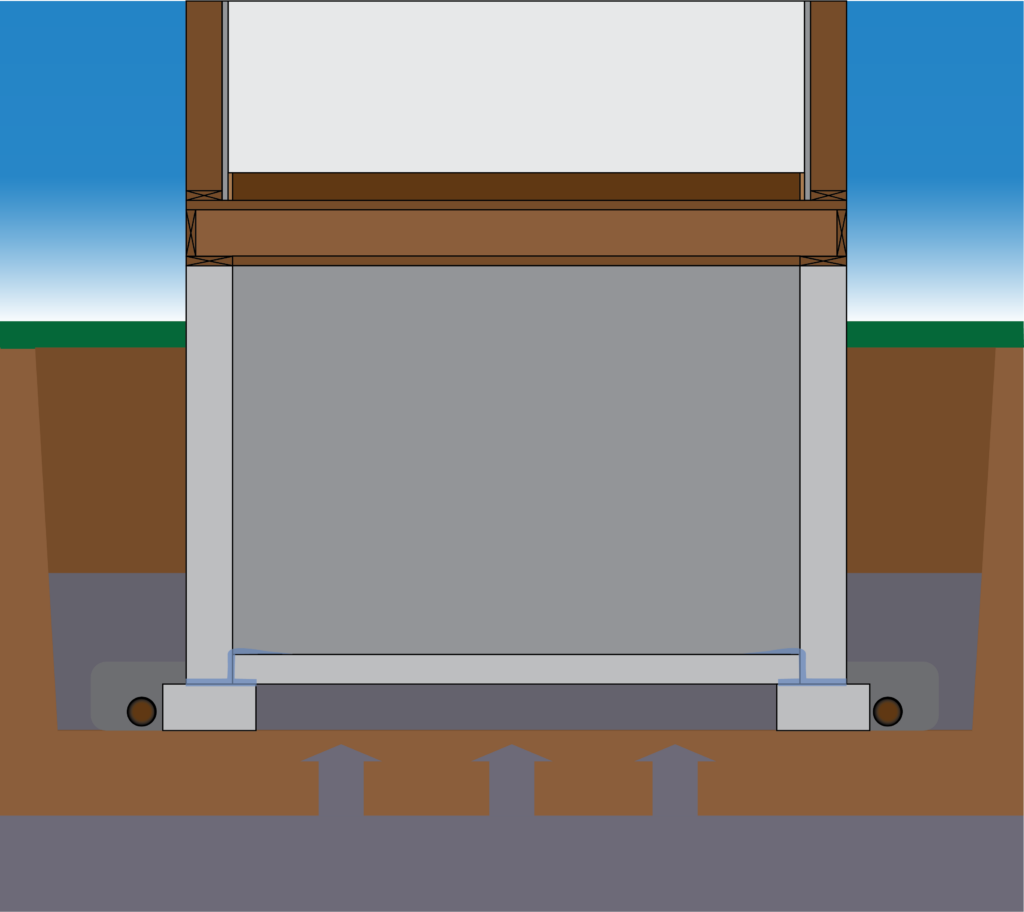
Locating where water is entering your home is key to choosing the appropriate solution, so mark the source whenever the seepage is active.
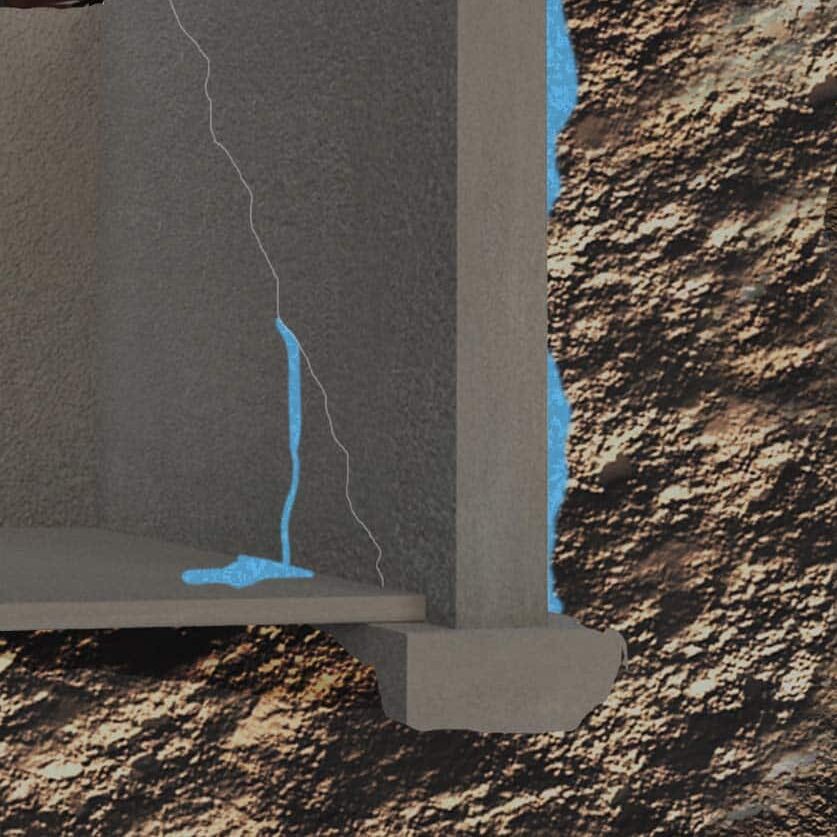
The most common basement leak is due to seepage through wall cracks. These cracks will continue to deteriorate, and the leak will get worse over time. Other possible wall leaks are tie rod ends, honeycombed concrete and pipe penetrations.
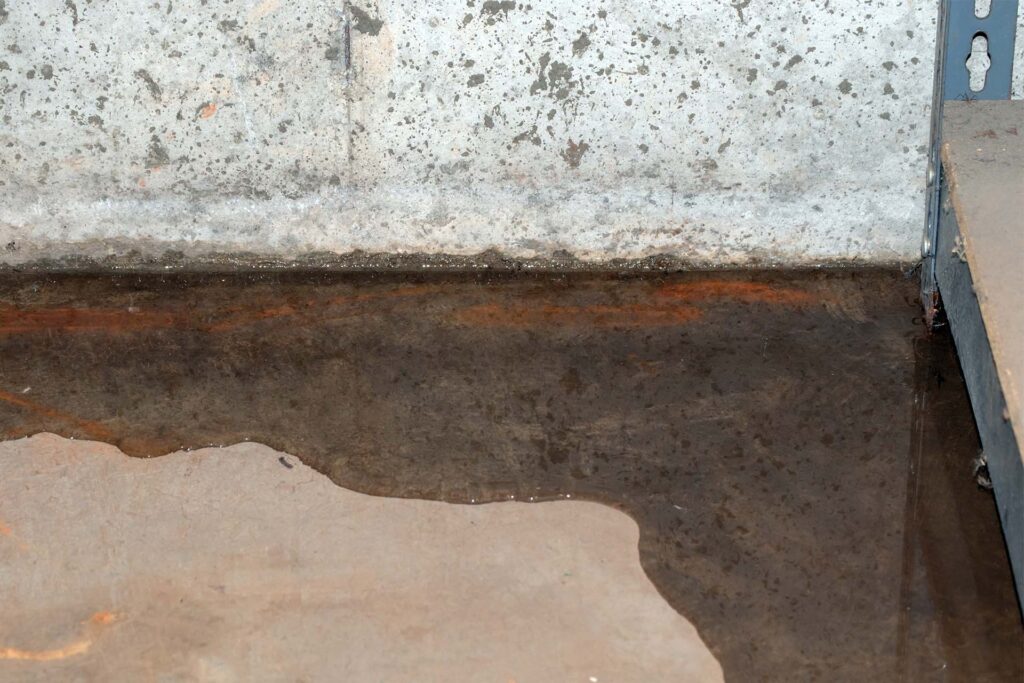
Most modern homes are built with a drain tile system around the footings to keep water from creating pressure against the floor or cove area (floor/wall joint). Some drain tiles run into the sump pump, while others run to the city storm sewer system. If seepage occurs in this area, check your pump's operation first. If that is working normally, then your drain tile is not. You should consider using a modern battery backup for your sump pump system.

Water entering at the top of the wall, between the concrete and wooden sill plate, can be caused by two things:
The soil grade has been built up outside the home, higher than the concrete. Homeowners, in their efforts to keep water away from the foundation, build the dirt level higher than the concrete wall, ironically creating a seepage problem through the below-grade brick or siding.
There is an above-grade penetration of water due to a caulking or tuck-pointing issue. Any water that penetrates the veneer of the house will run down the back side of the siding and appear at the sill-plate juncture in the basement.
The surest way to verify which of these two "spillover" problems you have is to water test by running a hose on the ground on a dry day. If water comes in, it is a below-grade problem. If water does not come in, then it is an above-grade problem, which will require caulking, tuckpointing or possibly roofing repairs. Anchored Walls can help you conduct this test, if you need assistance.
A basement is a valuable part of your home and is designed to be dry, usable space, whether as a finished recreation room, a workshop or simply a safe storage area. Once a leak occurs, its usefulness and value is very limited. Fortunately, permanent solutions are available for all seepage problems. Basement leaks need to be repaired immediately to avoid further problems and repair costs. At Anchored Walls, we make having a dry basement as easy as picking up the phone.
Wet and leaky basements are prone to flooding and water damage. This is especially a concern for older homes in Iowa that haven't been properly waterproofed. As homes age, the original waterproofing systems become much less effective, and excess moisture begins to damage basement floors and walls. However, leaky basements aren't limited to older homes; newly constructed homes can also have moisture issues.
Regardless of how good your leaky basement looks now, with enough time, the excess moisture around your home will start to eat away at your basement walls and floor. Due to the fact that older homes were typically waterproofed using methods that are now outdated and ineffective, you might need to install a newer basement waterproofing system.
Most basement and foundation water damage is caused from hydrostatic pressure. Hydrostatic pressure occurs when the soil around and beneath your home gets saturated with excess moisture from rain, melting snow, over-watering or condensation from A/C units. This water puts pressure against the walls of your basement and will even start to put force against your basement flooring. With continuous hydrostatic pressure over many years, your walls and floors can start to crack and rot. Hydrostatic pressure can be a constant strain on your walls and floor, if your basement is routinely flooded.

In many homes, soil settlement or the weakening of your foundation base is either caused from excess moisture in your clay soil or from water leakage. Foundation repair can be done with the help of our foundation repair specialists in Iowa.
Water damage and leaky basements are caused by various things, including weather events, cracks in plumbing equipment, blockages in drains and toilets, weakening of concrete basements, and improper functioning of a/c systems and other appliances. All these factors may lead to water damage, which will leave you with a damaged and leaky basement.
Water damage affects indoor air quality, as well. A leaky, damp basement acts as a breeding ground for molds. Mold typically grows on wood, ceiling tiles, wallpaper and/or insulation. To control mold growth, Anchored Walls needs to control the amount of moisture in your home.

Many homeowners are not concerned about proper yard drainage, until it’s too late. Water will always follow the path of least resistance, and when a property doesn't have proper drainage, water will pool up in low-lying areas, seep into the ground and eventually into your basement. Suitable slopes and drains on your property are necessary to direct water runoff.
The two categories of water found on a yard are surface and subsurface. Subsurface water is located below the immediate layer of topsoil, which cannot travel any lower due to the rigidness of the soil beneath it. Surface water includes rainfall and over-watering, which can be caused by sprinkler systems.
So, you've noticed a tiny crack in your basement wall. While you may think this is not a huge deal, it can unfortunately be a much larger problem than it appears. A basement wall crack may appear small on the inside of your home, but it can actually be much larger on the outside.
Water seeps in through this large exterior crack and into your basement through the smaller crack. If left untreated, this tiny crack will begin to grow. If you live on a lot with a lot of clay soil, the pressure exerted on a small crack can cause it to grow even quicker. A leaky basement, if not fixed with a basement waterproofing system, will lead to a plethora of repair costs and headaches in the future.
Our basement waterproofing experts in Iowa can fix basement cracks quickly and efficiently. All basement wall cracks need to be evaluated, no matter how much of a concern you think they may be. If left untreated, these cracks may lead to serious structural problems for your home and dangerous living conditions for your family.


By submitting this form and signing up for texts, you consent to receive text messages from Anchored Walls at the number provided, including messages sent by auto dialer. These may include messages related to estimates, project updates, appointment scheduling, and promotional offers. Consent is not a condition of purchase. Msg & data rates may apply. Msg frequency varies. Unsubscribe at any time by replying STOP or clicking the unsubscribe link (where available) and no further messages will be sent. Reply HELP for help. Information will not be shared with third parties for marketing or promotional purposes. Privacy Policy

