Finding a bowing basement wall is unsettling, and the repair conversation that follows can feel just as overwhelming. You've probably heard two solutions mentioned more than any other: wall anchors and carbon fiber straps. Both address bowing walls, both are far less invasive than replacing the wall entirely, and both come up in nearly every inspection conversation. What they don't do is solve the same problem in the same way.
Understanding the difference isn't about choosing one before an inspector arrives. It's about knowing enough to have a real conversation when they do. A bowing wall that looks similar to your neighbor's may be at a different stage, moving in a different direction, or responding to different soil conditions entirely. The right solution depends on what's actually happening with your specific wall, not just what it looks like from the inside.
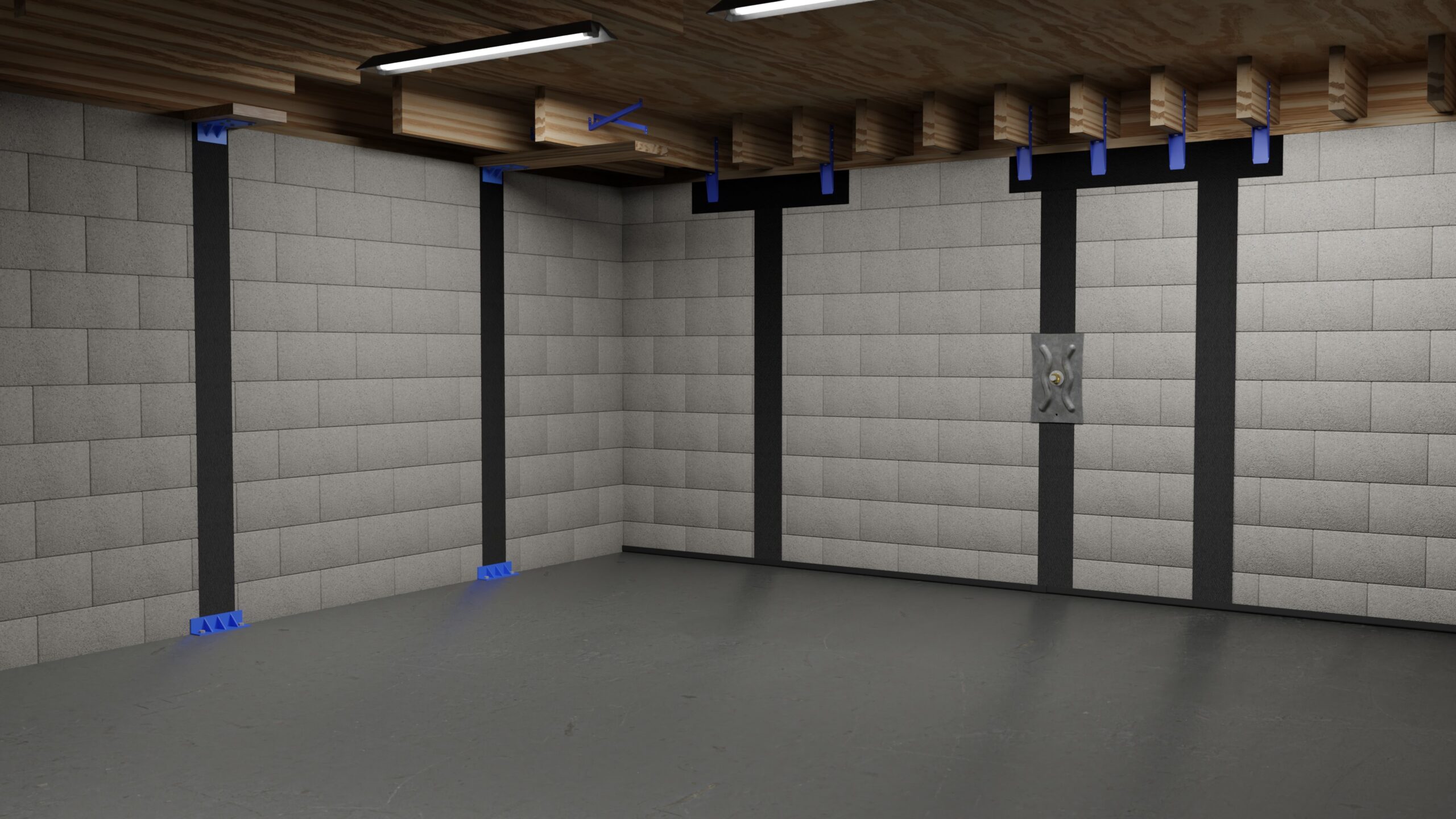
Carbon fiber straps are one of the least invasive ways to address a bowing basement wall. They're applied vertically to the face of the wall using epoxy and anchored at the top and bottom with steel brackets. There's no excavation involved, no bulky hardware taking up space, and installation is typically completed in a single visit. Here's what makes this solution a fit for certain situations and not others.
The right candidate for carbon fiber is a wall that needs to be stopped, not one that needs to be corrected. Whether that applies to your wall is something a specialist will determine during an inspection.
Wall anchors take a different approach to the same problem. Rather than reinforcing the wall surface from the inside, the system works by connecting the wall to stable soil outside the foundation through a steel rod and plate assembly. That connection applies counterpressure against the bowing wall from the outside, stopping further movement and creating the mechanical foundation for gradual correction over time. For walls that have already moved beyond what carbon fiber can address, anchors are often the conversation a specialist will want to have.
Wall anchors are a well-established repair with decades of use behind them, but like any foundation solution, they work best when the conditions actually call for them. A wall that looks like an anchor candidate from the inside may tell a different story once a specialist evaluates the full picture.
Carbon fiber straps and wall anchors cover a wide range of bowing wall situations, but there are cases where neither one is the appropriate starting point. When a wall has moved beyond roughly two inches or shows signs of more advanced structural compromise, a rigid bracing solution may be what's needed instead.
In those situations, Anchored Walls installs the Waler Steel Beam System, which uses heavy-duty interior beams to stop further movement and reinforce the wall against ongoing soil pressure. It's a more involved solution than either straps or anchors, but for walls that have progressed past the point where lighter systems can do the job, it's the appropriate response.
The reason this matters in a comparison like this one is that bowing walls don't always fall neatly into one category. A wall that has been moving slowly for years without being addressed may look similar to one that shifted recently, but the structural situation can be significantly different. Trying to apply a stabilization solution to a wall that needs structural reinforcement is how repairs fail. Getting the assessment right before any work begins is what determines whether the fix actually holds.
No blog post, comparison guide, or online research can tell you which solution your wall actually needs. The degree of movement, the direction of that movement, the soil conditions outside the foundation, the wall material, and how long the problem has been developing all factor into what makes sense. Two walls that look similar from inside a basement can require completely different approaches once a specialist has assessed what's driving the problem.
Anchored Walls has been repairing foundations across Iowa and northern Missouri for over 40 years. Every inspection is performed by a certified specialist who will measure the movement, evaluate the wall condition, and explain what's happening in plain terms before recommending anything. There's no pressure to decide on the spot, and every estimate is free.If you're seeing a wall that looks like it's moving, the time to have it looked at is before it moves further. Schedule your free inspection and get a clear answer on what your wall actually needs.
By submitting this form and signing up for texts, you consent to receive text messages from Anchored Walls at the number provided, including messages sent by auto dialer. These may include messages related to estimates, project updates, appointment scheduling, and promotional offers. Consent is not a condition of purchase. Msg & data rates may apply. Msg frequency varies. Unsubscribe at any time by replying STOP or clicking the unsubscribe link (where available) and no further messages will be sent. Reply HELP for help. Information will not be shared with third parties for marketing or promotional purposes. Privacy Policy

