Bowing basement walls are one of the most urgent foundation problems Iowa and Northern Missouri homeowners face. Here's what causes them, how to recognize the warning signs, and how Anchored Walls repairs them.


You notice the wall in your basement isn't quite straight anymore. There's a curve to it, maybe subtle, maybe obvious. There might be a horizontal crack running across the middle of a block wall, or the wall seems to lean slightly inward at the center. It doesn't look the way it used to, and you're not sure if it's serious.
It is. Bowing basement walls are one of the more urgent foundation problems a home can develop, and they don't stabilize on their own. The soil pressure causing the movement continues through every wet season and freeze-thaw cycle Iowa and Northern Missouri deliver. The earlier the problem is addressed, the more repair options are available and the lower the cost.
Anchored Walls has repaired bowed basement walls across Iowa and Northern Missouri since 1978. Here's what causes it, what to look for, and how it gets fixed.
The soil surrounding a basement foundation is rarely static. In Iowa and Northern Missouri, where clay-heavy soils are common, that movement is more pronounced than in many other parts of the country. Clay absorbs water and expands when wet, then contracts as it dries out. That cycle repeats every season, and each repetition puts lateral pressure against the foundation wall.
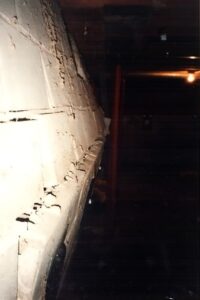
When that pressure exceeds what the wall can handle, the wall begins to move inward. The most vulnerable point is typically the middle of the wall, away from the corners where the structure is reinforced. That's why bowing walls most often show the greatest deflection at their center.
Several conditions accelerate the problem. Poor drainage that allows water to pool against the foundation keeps the soil saturated longer, increasing the pressure it exerts. Downspouts that terminate too close to the house direct water directly into the soil zone around the foundation. Freeze-thaw cycles add another layer of stress: when saturated soil freezes, it expands with significant force, and that force pushes against the wall before thawing and releasing. Over years and decades, that repeated stress weakens the wall's resistance.
Iowa's winters make this cycle more damaging than in milder climates. A foundation wall that might hold up for decades in a warmer region can develop visible bowing in far less time when it's dealing with repeated hard freezes on top of already-saturated clay soil.
Some of these signs are easy to spot. Others are subtle enough that homeowners dismiss them for months before realizing what they're looking at. If you're seeing any of the following, it's worth having the wall evaluated.
Any one of these signs warrants a closer look. Several appearing together, or any sign that has worsened over a single season, should be evaluated by a specialist as soon as possible.
Not every bowing wall requires the same repair. The right solution depends on how far the wall has moved, what type of foundation it is, and what the soil and site conditions look like. A free inspection is what determines the appropriate approach. These are the systems Anchored Walls installs for bowed wall repair across Iowa and Northern Missouri.
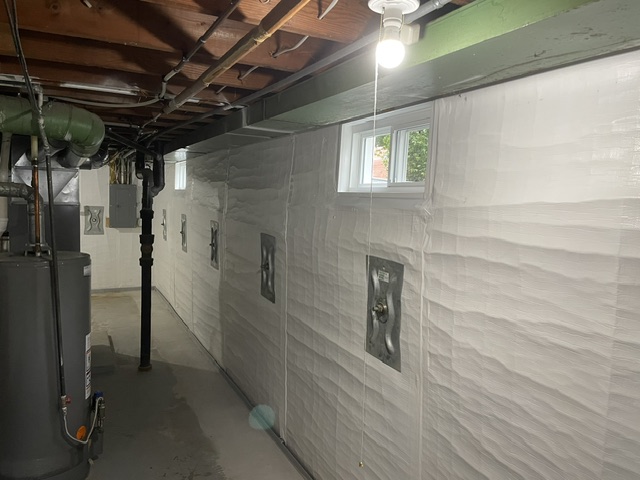
Carbon Fiber Straps are used for walls in the early stages of bowing, typically with less than two inches of inward movement. Carbon fiber straps are bonded directly to the wall surface with epoxy and anchored to the floor joists above and the slab below, creating a high-tension reinforcement that resists further movement. Installation requires no excavation and leaves a low-profile finish that can be painted over. Most installations are completed in one to two days.
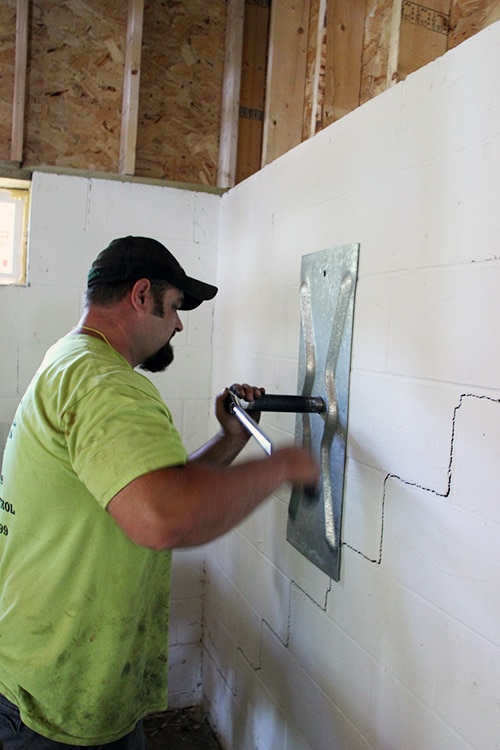
Wall Anchors are a permanent, adjustable solution for walls that have moved beyond what carbon fiber alone can address. A steel rod connects an interior wall plate to an exterior anchor plate driven into stable soil outside the foundation. The system counteracts the lateral pressure pushing against the wall and can be gradually tightened over time during dry conditions to slowly pull the wall back toward its original position. Wall anchors require a small excavation outside to set the exterior plate.
Helical Tie-Backs work on a similar principle to wall anchors but are drilled at an angle through the wall into the soil outside rather than requiring a separate excavation point. They're particularly useful in situations where a standard wall anchor installation isn't practical due to site conditions.
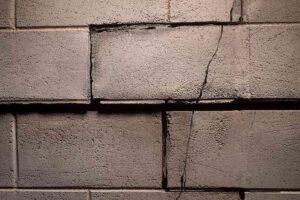
The Waler Steel Beam System is reserved for walls with more significant bowing, typically beyond two inches, or where shear failure is present along the mortar joints. Heavy-duty steel beams are installed vertically along the interior wall, anchored at the top and bottom, and spaced approximately every four feet. The system stops further movement and can be used in combination with wall anchors for severe cases. It works with block, poured concrete, and wood foundation walls.
In some situations, more than one system is used together. A wall with significant bowing and active water intrusion may require both structural repair and interior drainage as part of the same scope of work. The inspection determines what combination makes sense for the specific wall and conditions.wall stands and which repair options are still available.
The repair options available for a bowing basement wall narrow as the damage progresses. A wall with less than two inches of movement is a candidate for carbon fiber straps, one of the least invasive repairs available. At two inches or beyond, the scope shifts to wall anchors, helical tie-backs, or a steel beam system. A wall that has sheared along the mortar joints or failed structurally may require partial or full reconstruction, which is a significantly different project than stabilization.
That progression matters because bowing walls don't pause between inspections. Iowa's freeze-thaw cycles and clay soil conditions mean the pressure driving the movement is present for much of the year. A wall that measures two inches of deflection in spring may measure more by fall.
The free inspection is what tells you where your wall stands and which repair options are still available.
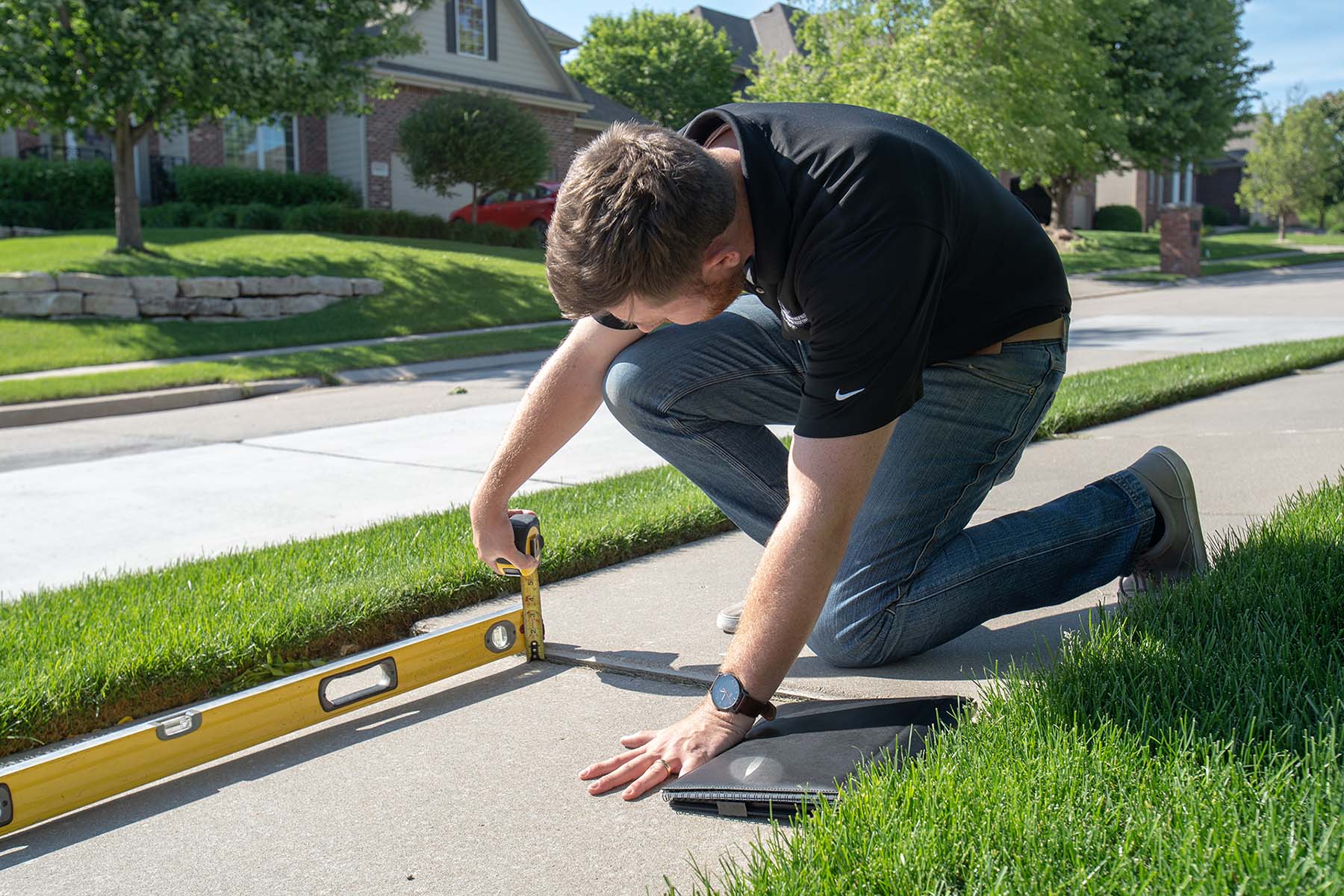
If your basement wall is bowing, cracking, or showing any of the signs covered on this page, the right next step is a free inspection from a specialist who can measure the movement, assess the wall condition, and tell you exactly what repair options apply to your situation.
Anchored Walls has repaired bowed basement walls across Iowa and Northern Missouri since 1978, backed by a Life-of-the-Structure Warranty and a Money-Back Guarantee. Inspections are free, estimates are written, and financing is available through a participating lender.Schedule your free bowed wall inspection with Anchored Walls and find out where your wall stands before another Iowa winter puts it to the test.
By submitting this form and signing up for texts, you consent to receive text messages from Anchored Walls at the number provided, including messages sent by auto dialer. These may include messages related to estimates, project updates, appointment scheduling, and promotional offers. Consent is not a condition of purchase. Msg & data rates may apply. Msg frequency varies. Unsubscribe at any time by replying STOP or clicking the unsubscribe link (where available) and no further messages will be sent. Reply HELP for help. Information will not be shared with third parties for marketing or promotional purposes. Privacy Policy

