Uneven concrete slabs, sunken sections, and visible cracks in your driveway aren’t just cosmetic, they’re signs of a deeper problem. Learn what causes driveway settling and what you can do to fix it before the damage spreads.
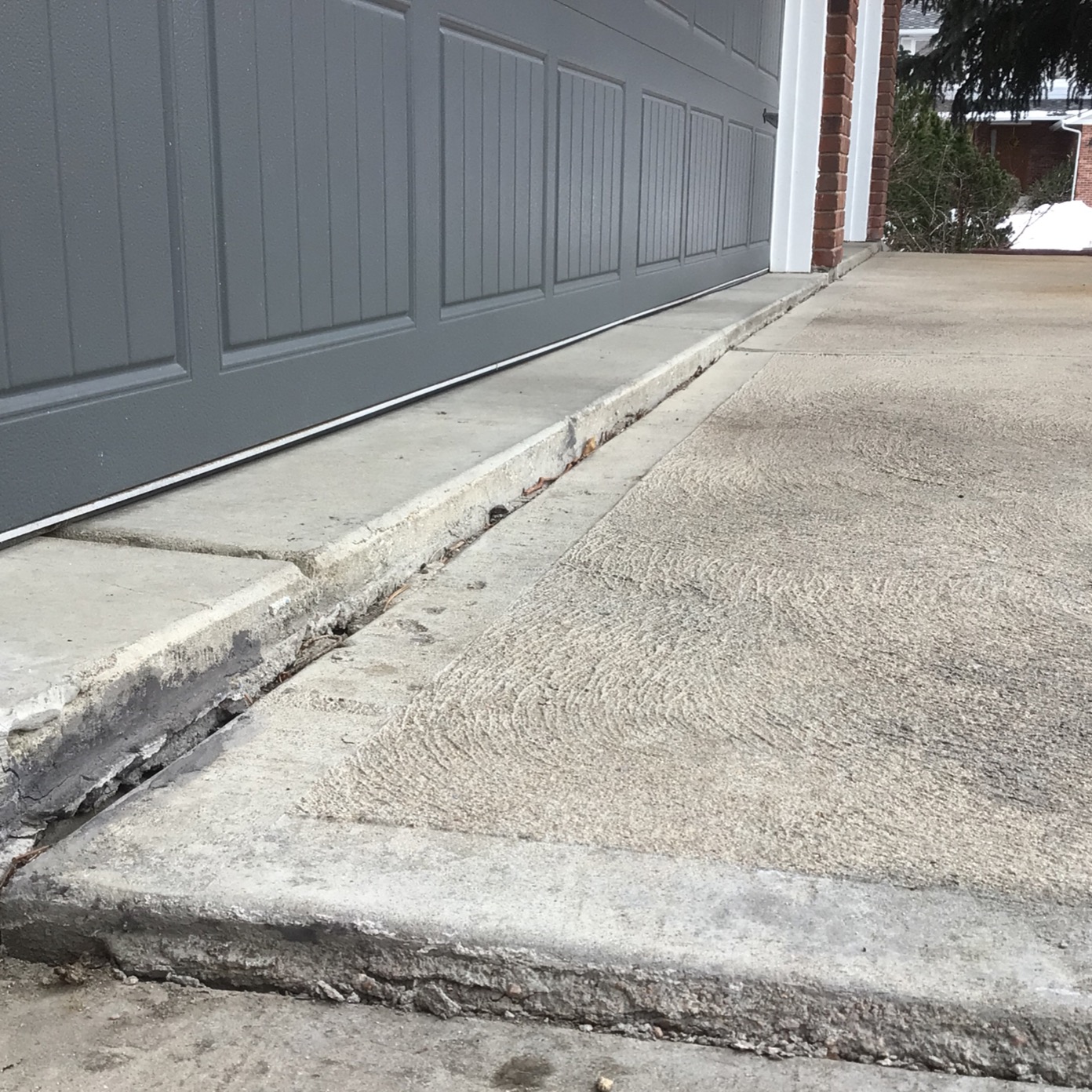

You might notice it when pulling into your garage: one side of the driveway dips lower than the other. Maybe a slab has cracked and dropped, or the surface feels more like a slope than a flat path. Over time, driveways can settle unevenly, leaving visible gaps between concrete sections or causing water to pool in low spots.
For many Iowa homeowners, these signs are easy to dismiss at first. But uneven concrete doesn’t just affect how your driveway looks; it can create safety hazards, drainage problems, and long-term structural concerns if ignored.
When a driveway settles, the damage isn’t limited to how it looks. Uneven concrete can lead to a number of safety and drainage problems that only get worse with time.
What starts as a small dip or crack often turns into a larger issue if left unaddressed, especially in Iowa’s freeze-thaw climate, where moisture and shifting soil can speed up the damage.
Most concrete driveways don’t crack or sink because of what’s above—they move because of what’s happening underneath. In Iowa, that often means unstable or shifting soil beneath the slab.
Several common causes include:
Even a perfectly poured driveway can shift if the ground beneath it gives way. Once one section drops, the surrounding slabs are more likely to move with it.
The good news is that a sunken driveway doesn’t always mean full replacement. In many cases, settled concrete can be lifted and leveled using a process that’s faster, cleaner, and more cost-effective than tearing it all out.
Concrete leveling restores the surface by injecting material beneath the slab to fill voids and raise it back to its original position. It’s less disruptive than demolition, and most projects can be completed in a day, with no need to pour new concrete or wait for it to cure.
For Iowa homeowners, this approach is ideal. It helps preserve the driveway you already have while correcting the underlying soil issues that caused the problem in the first place.
Concrete rarely settles evenly, and once one section moves, the rest tend to follow. That means today’s small dip could turn into a larger crack, or begin affecting steps, walkways, or even the slab leading into your garage.
In Iowa’s climate, where freeze-thaw cycles and heavy rainfall are common, time isn’t on your side. The longer the issue goes unaddressed, the more costly and complicated the repair may become.
If your driveway is already uneven or sinking, taking action now can help you avoid more serious concrete or foundation problems later on.
At Anchored Walls, we’ve been helping Iowa homeowners restore safety and stability to their concrete for over 40 years. If your driveway is starting to sink, tilt, or separate, we’re here to help.
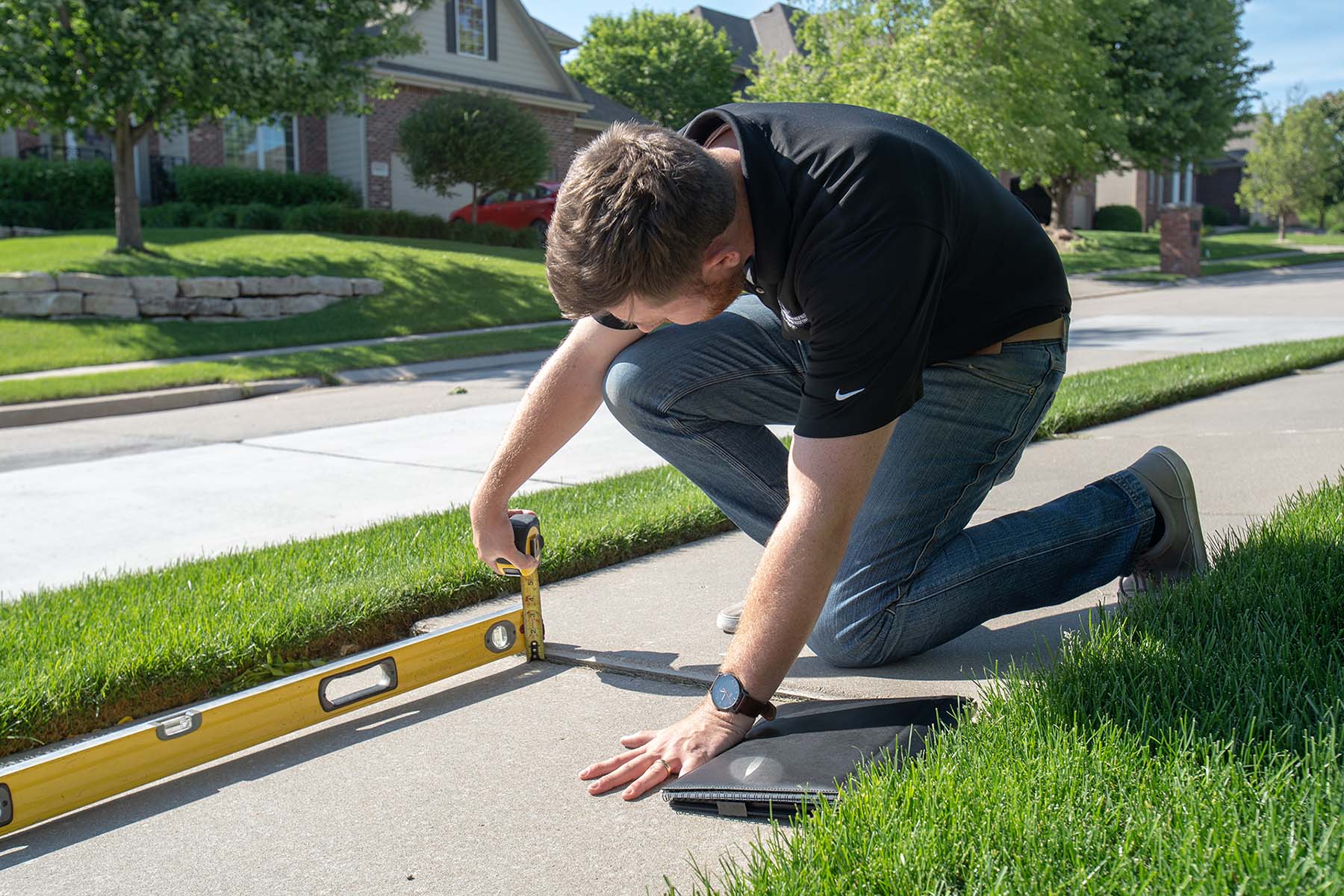
Learn more about our concrete leveling solutions or schedule an inspection to find out what’s happening beneath your slab.
By submitting this form and signing up for texts, you consent to receive text messages from Anchored Walls at the number provided, including messages sent by auto dialer. These may include messages related to estimates, project updates, appointment scheduling, and promotional offers. Consent is not a condition of purchase. Msg & data rates may apply. Msg frequency varies. Unsubscribe at any time by replying STOP or clicking the unsubscribe link (where available) and no further messages will be sent. Reply HELP for help. Information will not be shared with third parties for marketing or promotional purposes. Privacy Policy

