Not all concrete repairs are the same. Learn the difference between mudjacking and polyurethane foam lifting and why homeowners in Iowa and Missouri are choosing foam for lasting results.


When concrete starts to sink around your home, whether it’s the front walk, the driveway, or part of your foundation, it’s a sign that something underneath has shifted. It might be poor soil conditions, water erosion, or the effects of time. Whatever the cause, uneven concrete can lead to bigger problems if it’s not addressed quickly.
Most homeowners who research repair options come across two common solutions: mudjacking and polyurethane foam lifting. Both are designed to raise sunken slabs, but the way they work and how long they hold up are two very different stories.
At Anchored Walls, we’ve been lifting and stabilizing concrete for over 40 years. We’ve used both methods in the field, and today we rely on polyurethane foam because it consistently provides stronger, longer-lasting results for our customers.
In this comparison, we’ll break down the pros and cons of each method so you can make a well-informed decision for your home.
Mudjacking is a traditional concrete repair method that’s been used for decades. The process involves drilling several large holes, usually about 1 to 2 inches in diameter, into the surface of the sunken slab. A thick mixture of water, dirt, and cement is then pumped through those holes to fill the void beneath and lift the concrete back into place.
While this method can offer a temporary fix, it comes with drawbacks. The material used is heavy, up to 100 pounds per cubic foot, and that added weight can put stress on already weak soils. If water gets under the slab again, the mixture may wash out or settle, bringing the problem right back.
We’ve used mudjacking in the past, but over the years, we’ve seen its limitations in areas with poor drainage or expansive soils.
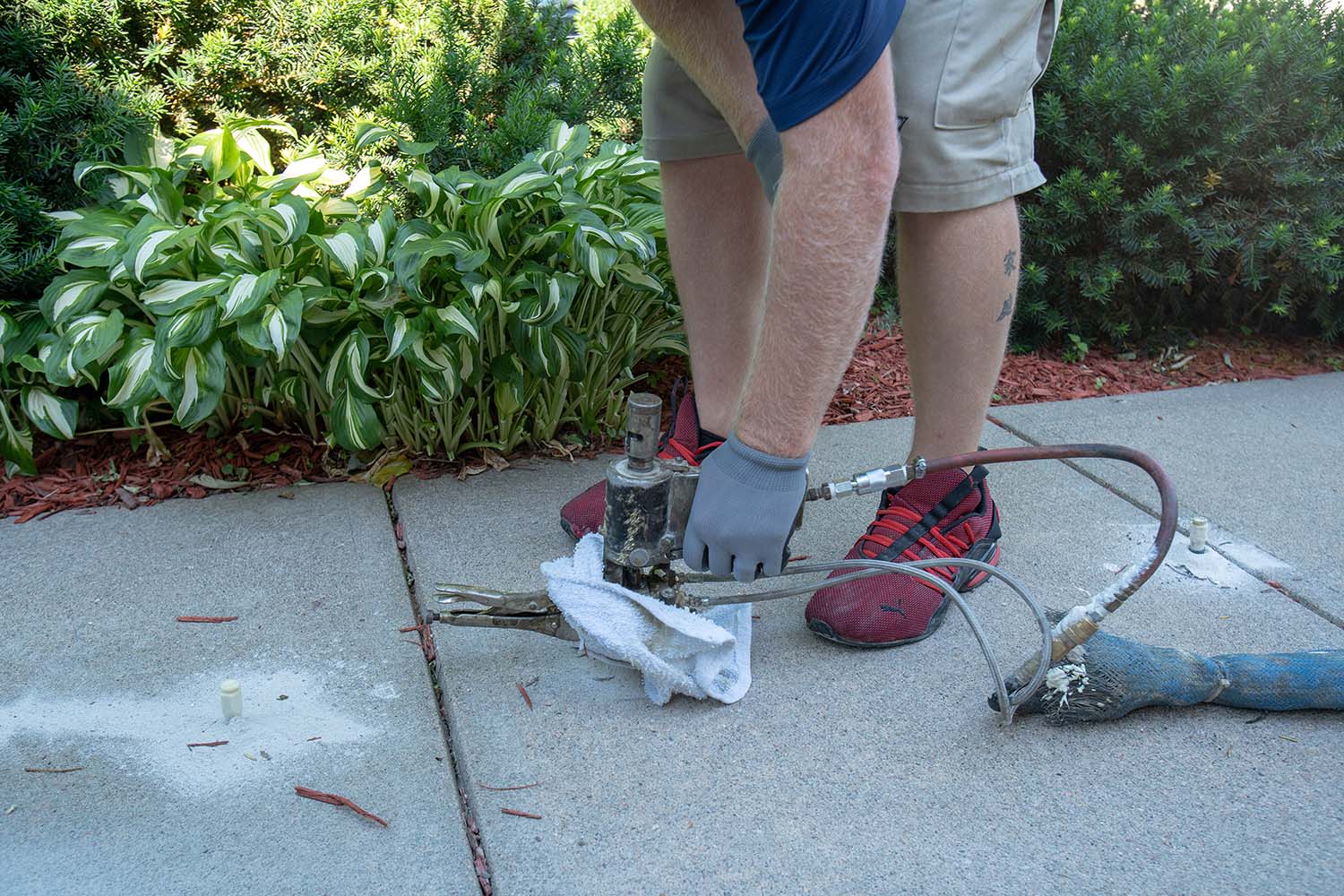
Polyurethane foam lifting, sometimes called polyjacking, is a modern approach to concrete repair that uses lightweight, expanding foam instead of heavy slurry. The process begins by drilling small holes into the slab, usually no larger than a dime. Then, a specialized polyurethane foam is injected beneath the concrete. As it expands, it fills the gaps and gently raises the slab back to its proper position.
What makes this method different is its precision and long-term stability. The foam weighs only a few pounds per cubic foot, so it doesn’t add pressure to unstable soil. It also cures quickly, often in less than 30 minutes, and it’s water-resistant, which helps prevent future erosion.
We use polyurethane foam lifting because it works. It solves the problem at the root and holds up through the kinds of soil and moisture conditions we see across Iowa and Missouri.
Mudjacking may have been the go-to solution in the past, but polyurethane foam lifting has quickly become the preferred choice for a reason. It’s cleaner, more precise, and it holds up better in areas like Iowa and Missouri, where soil conditions and moisture can change fast.
At Anchored Walls, we’ve spent decades helping homeowners fix uneven concrete. We’ve seen how traditional methods can fall short over time. That’s why we’ve moved to polyurethane foam. It not only lifts the slab; it provides lasting support without adding weight or requiring messy cleanup.
If you’re looking for a repair that’s fast, reliable, and built to last, polyurethane foam is the better option.
If your concrete is sinking or starting to crack, don’t wait for it to get worse. Whether it’s your driveway, sidewalk, or garage floor, our team at Anchored Walls is here to help.
We’ve been lifting concrete across Iowa and Missouri for more than 40 years, and today, we use polyurethane foam because it delivers lasting results. The process is fast, the repair is clean, and the fix is built to stay put.
Schedule a free estimate today. We’ll take a look, explain your options, and help you decide the best way to restore your concrete with confidence.
Both methods aim to lift concrete, but they do it in very different ways, with very different outcomes. Here’s how mudjacking and polyurethane foam lifting compare in key areas that matter to long-term performance and peace of mind:
| Category | Mudjacking | Polyurethane Foam Lifting |
| Drill Size & Setup | Requires large holes (about 1–2 inches) and heavy equipment to pump in slurry. | Small injection holes (about ⅜ inch) with a clean, minimal setup. |
| Cure Time | Can take up to 48 hours before the surface is ready for normal use. | Foam sets in 15–30 minutes. Most surfaces are ready the same day. |
| Precision | Can be less accurate, with a risk of uneven lifting or overcorrection. | Expands in a controlled way for smooth, consistent results. |
| Material Weight | Slurry is dense and heavy and can worsen soil settlement over time. | Foam is lightweight and doesn’t strain unstable soil. |
| Durability | Can erode or wash out, especially in wet or unstable conditions. | Waterproof, long-lasting, and designed to stay in place. |
| Mess & Disruption | Slurry can leave residue and often requires surface cleanup. | Quick, clean installation with minimal mess. |
| Expected Lifespan | Often considered a short-term fix. May need to be redone in a few years. | Built to last with little to no maintenance required. |
By submitting this form and signing up for texts, you consent to receive text messages from Anchored Walls at the number provided, including messages sent by auto dialer. These may include messages related to estimates, project updates, appointment scheduling, and promotional offers. Consent is not a condition of purchase. Msg & data rates may apply. Msg frequency varies. Unsubscribe at any time by replying STOP or clicking the unsubscribe link (where available) and no further messages will be sent. Reply HELP for help. Information will not be shared with third parties for marketing or promotional purposes. Privacy Policy

