Iowa winters are not gentle. By the time March arrives, your driveway, sidewalk, and patio have been through months of freezing temperatures, snowmelt, and repeated freeze-thaw cycles that most homeowners never think twice about. But the ground underneath your concrete has been working against it all season long, and the evidence tends to show up right when the weather finally breaks.
Temperature swings define Iowa's winters. A warm afternoon in January can send meltwater seeping into the soil beneath your concrete, and when temperatures drop again overnight, that moisture freezes and expands. This process, known as frost heave, pushes up against your concrete slabs from below with significant force.
Over time, and after dozens of these cycles in a single season, the soil underneath your driveway or sidewalk shifts unevenly. Some areas are compact, others expand, and the concrete above them follows. What starts as a barely noticeable tilt becomes a visible dip or a raised edge that catches your foot every time you walk past it.
Iowa's clay-heavy soils make this especially pronounced. Clay absorbs and holds moisture more than sandy or loamy soils, which means there is more water in the ground to freeze and expand with every cold snap.
When the ground finally thaws and settles, the concrete does not always settle with it. Slabs that were pushed up or undermined during the winter are left sitting unevenly, with voids beneath them where soil has shifted or washed away. That is when the visible damage becomes hard to ignore.
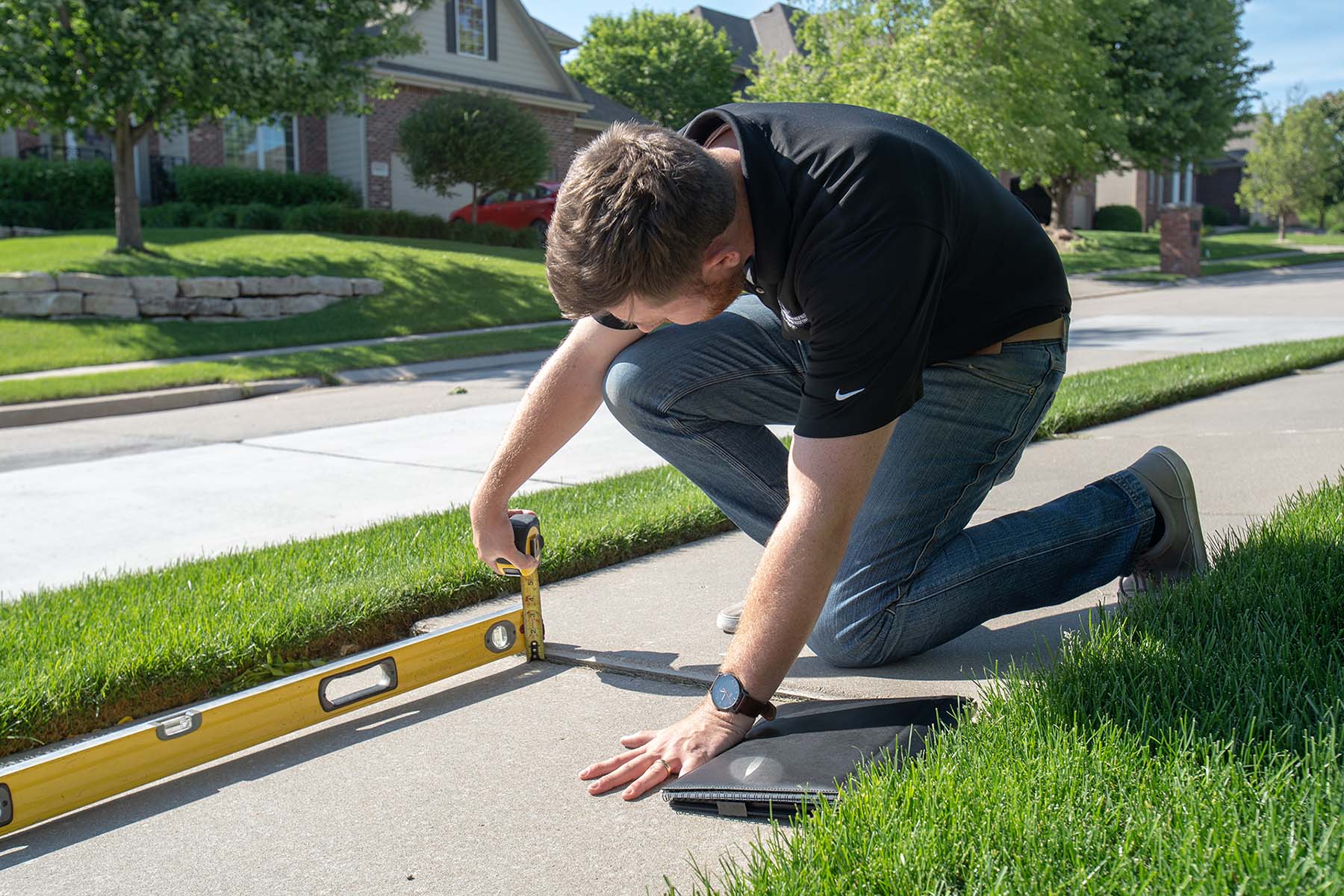
Sunken or raised sections along your driveway are the most obvious sign. You may also notice cracks running across slabs, gaps forming between your concrete and the garage floor, or sections of your sidewalk that rock underfoot. Pooling water is another red flag. When slabs tilt toward your home instead of away from it, water follows, and that drainage problem can create issues for your foundation over time.
The frustrating part is that most of this damage was not caused by anything you did wrong. It is simply what Iowa winters do to concrete that sits over soil that freezes, shifts, and thaws season after season.
When homeowners see sunken or cracked concrete, the instinct is often to assume it needs to be torn out and replaced. But in most cases, that is not true. If the slab itself is structurally sound, the real problem is the soil underneath it, and that is exactly what concrete leveling addresses.
Anchored Walls uses polyurethane foam lifting to raise sunken slabs back to their original position. A small hole is drilled into the affected slab, and a high-density foam is injected beneath it. The foam expands to fill voids, stabilize the soil, and lift the concrete back into place. The process takes a fraction of the time and cost of replacement, and the results are immediate.
It is also a smarter long-term investment. New concrete is just as vulnerable to Iowa's freeze-thaw cycles as the slab you already have. Leveling addresses the underlying soil problem rather than simply starting the clock over on the same issue.
Spring is the best time to address winter concrete damage, but the homeowners who get ahead of it are the ones who schedule early. Once the ground fully thaws and temperatures stabilize, Anchored Walls can assess the damage and get your concrete back where it belongs before the problem gets worse or creates a safety hazard on your property.
Sunken concrete does not stay in one place. Every rainfall that pools in a low spot, every vehicle that crosses an uneven driveway edge, and every summer heat cycle puts additional stress on slabs that are already compromised. What is a manageable fix in the spring can become a more involved repair by fall.
If you noticed new cracks, sinking, or uneven sections this winter, now is a good time to get it on your radar. Anchored Walls offers free estimates with no pressure, and our team can tell you quickly whether leveling is the right approach for your situation.
Concrete damage from an Iowa winter rarely fixes itself. The voids left behind by shifting soil stay empty, slabs continue to settle, and the cracks that started small get wider with every freeze-thaw cycle that follows.
The good news is that most winter concrete damage is very fixable, and the sooner it is addressed, the simpler and less expensive the repair tends to be. Anchored Walls has been helping Iowa and northern Missouri homeowners restore their concrete for over 40 years. We know what winter does to slabs in this part of the country, and we know how to fix it.
Schedule your free concrete leveling estimate today and go into spring with one less thing to worry about.
It usually starts with a smell.
A musty odor is creeping up from the basement. Maybe some discolored spots on the wall, or a fuzzy patch near the floor. At first, it’s easy to brush off, just an old house smell, a bit of dust, maybe something you’ll get around to cleaning.
But mold and mildew in the basement are rarely just surface-level. They’re signs of a deeper water problem beneath your home. And the longer you ignore them, the more damage they can do to your walls, your air quality, and your peace of mind.
Whether you’ve spotted growth or simply noticed that stale, damp feeling in the air, Anchored Walls is here to help you stop the moisture at its source.
Mold and mildew need just two things to grow: moisture and poor airflow. Unfortunately, basements provide both.
Water enters through cracks in the foundation, collects near footings, or seeps in through porous concrete walls. Even if there’s no visible flooding, the constant pressure of groundwater around your foundation can force moisture through the walls, a process known as hydrostatic pressure. That moisture lingers in the air, creating a damp environment where mold spores thrive.
Cool, still air and limited ventilation make basements the perfect place for those spores to settle and spread. Over time, what starts as an invisible problem becomes visible on walls, floors, and anything stored nearby.
If you’re seeing mold, you’re already dealing with a basement that’s too wet.
Mold doesn’t always announce itself with a bold patch on the wall. In many homes, the symptoms start small, easy to miss, but impossible to ignore once you know what to look for.
Musty smell that never goes away
Even if you can’t see it, that damp, stale odor rising from the basement is often the first sign that mold is spreading behind walls or under floors.
Dark streaks or patches on walls
Black, green, or brown spots, especially near the base of foundation walls, may point to mold growth caused by hidden moisture intrusion.
White fuzz or discolored spots near floor joints
Efflorescence or surface mold often appears on joists, insulation, or stored items where humidity builds up over time.
Peeling paint or chalky residue
Paint that bubbles, flakes, or shows a dusty film could be reacting to constant moisture behind the wall, making it a perfect host for mold.
Coughing or allergies that worsen in the basement
Mold spores can trigger breathing issues, especially in damp, closed environments. If symptoms improve upstairs, your basement air may be to blame.
Basement mold isn’t just a stain; it’s a symptom. And covering it up won’t stop what’s causing it.
Many homeowners try to paint over moldy patches or seal their walls with waterproof coatings. But if the foundation is still allowing moisture in, the mold will come back, sometimes hidden, sometimes worse. Mold doesn’t need standing water to grow. It only needs a damp surface and a little time.
Store-bought cleaners might remove what’s visible, but they don’t fix the cracks, the water pressure, or the vapor coming through the walls.
That’s why true mold control starts with stopping the moisture. Until you fix what’s happening behind the surface, you’re only treating the symptoms, not the source.
At Anchored Walls, we understand that mold is never just a surface issue; it’s a sign that your basement is holding more moisture than it should.
With over 40 years of experience serving Iowa and Missouri homeowners, our team specializes in solving the cause of basement mold. Whether it’s a foundation crack letting water seep in, poor drainage around the home, or water vapor pushing through the walls, we design a solution that stops the moisture at its source.
Our services may include:
Every fix is built for long-term performance, no shortcuts, no surface-only treatments. We don’t just want your basement to look better. We want it to stay dry, clean, and safe for years to come.
Mold and mildew are signs that your basement is holding too much moisture, and that the problem may be growing behind the walls. Anchored Walls can help you find out why it’s happening and fix it for good.
Schedule a free evaluation today. Our team will inspect your basement, explain what’s causing the issue, and recommend a long-term solution you can trust.
If you’ve patched the same crack in your foundation wall more than once, you’re not alone. Many homeowners try to seal up small cracks only to see them reappear months or even weeks later. It’s frustrating, and it can feel like the house is working against you.
The truth is, recurring cracks are often a sign of a deeper problem that patching alone can’t solve. Let’s explore why these cracks keep recurring and how to determine when it’s time to consider a more comprehensive solution.
Foundation walls are constantly under pressure. Whether it’s from expanding soil, poor drainage, or freeze-thaw cycles, the forces acting on your basement walls don’t go away after a surface crack is filled.
If the underlying pressure isn’t addressed, the wall will continue to move, and that crack will reopen or form somewhere else nearby. In many cases, patching only covers the symptom, not the cause.
If you’re seeing any of the following, your foundation likely needs structural support, not just cosmetic repairs:
These are all signs that the foundation is moving, and no amount of patching will stop that.
When a foundation wall is bowing, settling, or shifting, it needs more than just surface-level repair. Structural stabilization is often the only way to stop the movement and prevent cracks from coming back. This is where solutions like wall anchors or helical tiebacks become essential. These systems are designed to address the source of the pressure by reinforcing the wall and restoring stability. Wall anchors can gradually pull the wall back toward its original position, while helical tiebacks provide lateral support to stop further inward movement. Once the foundation is stabilized, any existing cracks can be sealed properly, knowing they are no longer under stress from shifting or bowing.
It’s easy to put off foundation repairs when cracks seem small or harmless. But in many cases, the real damage is happening behind the scenes. A crack that reopens may be a sign of ongoing wall movement, and that movement can lead to much more serious problems over time.
When pressure from outside the foundation goes unaddressed, the damage can escalate quickly. Here’s what homeowners risk by waiting too long:
What starts as a hairline crack can grow into a costly repair. Acting early is the best way to protect your home and your budget.
If you’ve patched the same crack more than once, or if you’re noticing new cracks appearing, it’s time to get a professional evaluation. At Anchored Walls, we specialize in diagnosing and solving foundation wall problems at the source.
Our solutions are designed to last, not just to hide the symptoms.
As summer heat dries out Iowa’s clay-heavy soil, the ground around your foundation begins to contract. This shrinkage can create gaps between the soil and your foundation walls, putting stress on the structure and leading to cracking. Even small fissures can allow moisture to seep in, especially as fall storms arrive.
When left unchecked, these cracks may widen or deepen, eventually affecting the stability of your home. That’s why late summer is the best time to identify and repair the problem before rain and freezing temperatures exacerbate the issue.
Once autumn arrives, Iowa’s weather becomes wetter, and that spells trouble for untreated foundation cracks. Even small gaps in your foundation can allow rainwater to seep in, especially during heavy downpours. That water intrusion can lead to:
Additionally, as the soil rehydrates after a dry summer, it expands and begins pushing against your foundation walls. If those walls are already weakened by cracks, this pressure can worsen the damage, leading to bowed or buckling walls that require more extensive repair.
Winter brings freezing temperatures that can make existing foundation cracks far worse. If water has entered those cracks during the fall, it can freeze and expand once temperatures drop, widening the gaps and stressing your foundation further.
This can result in:
On top of that, frozen ground makes many repairs more difficult to complete, or even impossible, until spring. Acting now avoids winter delays and keeps your foundation protected through the harshest months of the year.
Summer offers the most favorable conditions to inspect and repair your foundation. The warm, dry weather creates a stable environment for crews to work efficiently and safely, with fewer delays due to rain or frozen ground. Cracks are easier to spot, and soil movement is more predictable, making it the ideal time to address structural issues before they grow.
Foundation repair in summer also gives you time to plan and budget without the pressure of an active leak or emergency. With more daylight hours and flexible scheduling, homeowners can complete the project on their terms, rather than reacting to sudden damage later in the year.
If you're considering repairs, taking action in summer gives you peace of mind heading into fall and winter. You’ll know your home is protected, and you’ll avoid the seasonal rush when contractors’ schedules fill up fast.
If you’ve noticed cracks in your foundation or walls, don’t wait for the weather to turn. Anchored Walls has been serving Iowa homeowners for over 40 years with trusted solutions that last.
Call today to schedule your free inspection and get expert advice from a local foundation repair company you can count on.


By submitting this form and signing up for texts, you consent to receive text messages from Anchored Walls at the number provided, including messages sent by auto dialer. These may include messages related to estimates, project updates, appointment scheduling, and promotional offers. Consent is not a condition of purchase. Msg & data rates may apply. Msg frequency varies. Unsubscribe at any time by replying STOP or clicking the unsubscribe link (where available) and no further messages will be sent. Reply HELP for help. Information will not be shared with third parties for marketing or promotional purposes. Privacy Policy

