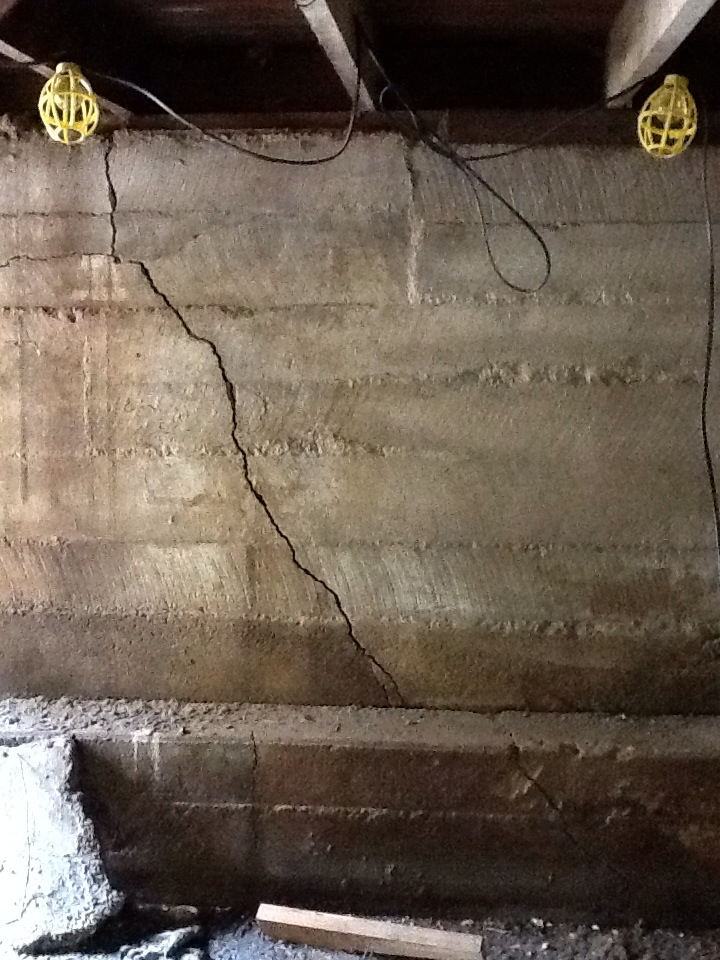
If you’ve patched the same crack in your foundation wall more than once, you’re not alone. Many homeowners try to seal up small cracks only to see them reappear months or even weeks later. It’s frustrating, and it can feel like the house is working against you.
The truth is, recurring cracks are often a sign of a deeper problem that patching alone can’t solve. Let’s explore why these cracks keep recurring and how to determine when it’s time to consider a more comprehensive solution.
Foundation walls are constantly under pressure. Whether it’s from expanding soil, poor drainage, or freeze-thaw cycles, the forces acting on your basement walls don’t go away after a surface crack is filled.
If the underlying pressure isn’t addressed, the wall will continue to move, and that crack will reopen or form somewhere else nearby. In many cases, patching only covers the symptom, not the cause.
If you’re seeing any of the following, your foundation likely needs structural support, not just cosmetic repairs:
These are all signs that the foundation is moving, and no amount of patching will stop that.
When a foundation wall is bowing, settling, or shifting, it needs more than just surface-level repair. Structural stabilization is often the only way to stop the movement and prevent cracks from coming back. This is where solutions like wall anchors or helical tiebacks become essential. These systems are designed to address the source of the pressure by reinforcing the wall and restoring stability. Wall anchors can gradually pull the wall back toward its original position, while helical tiebacks provide lateral support to stop further inward movement. Once the foundation is stabilized, any existing cracks can be sealed properly, knowing they are no longer under stress from shifting or bowing.
It’s easy to put off foundation repairs when cracks seem small or harmless. But in many cases, the real damage is happening behind the scenes. A crack that reopens may be a sign of ongoing wall movement, and that movement can lead to much more serious problems over time.
When pressure from outside the foundation goes unaddressed, the damage can escalate quickly. Here’s what homeowners risk by waiting too long:
What starts as a hairline crack can grow into a costly repair. Acting early is the best way to protect your home and your budget.
If you’ve patched the same crack more than once, or if you’re noticing new cracks appearing, it’s time to get a professional evaluation. At Anchored Walls, we specialize in diagnosing and solving foundation wall problems at the source.
Our solutions are designed to last, not just to hide the symptoms.


By submitting this form and signing up for texts, you consent to receive text messages from Anchored Walls at the number provided, including messages sent by auto dialer. These may include messages related to estimates, project updates, appointment scheduling, and promotional offers. Consent is not a condition of purchase. Msg & data rates may apply. Msg frequency varies. Unsubscribe at any time by replying STOP or clicking the unsubscribe link (where available) and no further messages will be sent. Reply HELP for help. Information will not be shared with third parties for marketing or promotional purposes. Privacy Policy

